Part 3: Assessment of Knowledge, Judgment, and Skills (OLA)
Explore the ABR’s Part 3 requirement for lifelong learning through Online Longitudinal Assessment (OLA) or the Continuing Certification Exam.
-
Periodically assessing your knowledge, judgment, and skills helps ensure you’re up to date on the latest in your specialty and supports your growth over time. Part 3 of Continuing Certification offers two options: Online Longitudinal Assessment (OLA) questions or a computer-based exam.
Every certificate has a five-year Part 3 cycle. To stay current with the Part 3 requirement, you must either:
- Meet or exceed the passing standard in your OLA current cumulative score in year five.
- Pass a Continuing Certification Exam in year four or five.
You won’t need to take the exam if you’re meeting your OLA performance standard.
Read more about each option below.
Online Longitudinal Assessment (OLA)
OLA is a convenient way to stay up to date in your specialty. It’s available to all diplomates certified in diagnostic radiology, interventional radiology/diagnostic radiology, radiation oncology, medical physics, and the subspecialties of neuroradiology, nuclear radiology, and pediatric radiology.
It’s flexible and designed to fit around your schedule.
Benefits include:
- Answering OLA questions takes just a few minutes each week.
- Questions are based on walking-around knowledge, so you don’t have to study.
- It helps you identify knowledge gaps. Incorrect answers lead to follow-up questions, helping you improve over time.
- You take the assessment remotely, so you don’t need to travel or take time off work.
The OLA Process
- Starting in January of the year after you attain your certification, you’ll receive two question opportunities per maintained certificate each week. These will appear on your OLA dashboard every Monday morning. Add @theabr.org to your approved senders list in your email to ensure you receive these notifications. You can change how often you receive reminders in your OLA Preferences.
- Diplomates maintaining a DR or IR/DR certificate have the option to select a practice profile. Questions are based on your selected practice profile. Diagnostic radiologists may choose up to four clinical practice areas. Interventional radiologists can customize their profiles with up to 50% of content from up to two clinical practice areas other than interventional radiology.
- Each question is available for four weeks and remains accessible for later reference after it’s been answered.
- After opening a question, you’ll have limited time to answer it (either one or three minutes, depending on the question’s complexity and on your discipline).
- You’ll receive immediate feedback, including whether your answer is correct, the correct answer if you answered incorrectly, a brief rationale, and at least one reference. [h3] Requirements
To meet OLA requirements, each year you must answer a minimum of:
- DR, DR and one subspecialty, IR/DR, or RO: 52 questions
- DR and two or more subspecialties, or IR/DR and one or more subspecialty: 52 questions per certificate
- MP: 52 questions per certificate
If you don’t answer the required number of questions for your certificate(s) every year, the rest will be forfeited. For example, if you’re required to answer 52 questions and only answer 50, the two unanswered questions will be forfeited and counted as incorrect. Forfeited questions may impact your performance evaluation.
Scoring and Passing
- Your score is based on a criterion-referenced standard specific to your question set.
- Your current cumulative score is continuously updated and viewable on your OLA dashboard after you’ve answered at least 50 scorable questions.
- You can decline up to 10 questions per year (or five for Nuclear Medical Physics).
- You must meet or exceed the passing standard in year five of your Part 3 cycle. Alternatively, you can take and pass a Continuing Certification Exam in year four or five.
- OLA evaluates your most recent 200 scorable questions per certificate.
For more information about OLA, please see our Continuing Certification FAQs.
OLA Needs Assessment Data
The ABR has administered millions of questions as part of Online Longitudinal Assessment (OLA). The tool is intended to allow each individual to track their own question history and identify gaps in knowledge. In addition, when viewed in aggregate, the relative rate of correct responses may provide guidance for developers of education courses and materials to target topics that represent areas of greatest need.
The content committees consist of experts who develop the questions and attempt to cover a domain that corresponds to the discipline or specialty selected. Within each domain, a range of responses is not unexpected. The results are presented in quartiles: Quartile 4 represents questions that were typically answered satisfactorily, whereas Quartile 1 topics represented a challenge for the group in aggregate. Click here to view the full report.
This is the first iteration of the presentation of this data, and we expect that it will undergo refinement over time; if you have suggestions on the formatting, please submit them on our website. We plan to release quarterly updates based on a rolling average of responses collected over the preceding six months.
Continuing Certification Exam
You’re only required to take the Continuing Certification Exam (CCE) to satisfy the Part 3 evaluation if your current cumulative OLA score doesn’t meet the standard in year five of your five-year cycle. You may take the CCE in year four or five of your five-year Part 3 cycle. The CCE is normally offered twice a year. If you don’t pass on your first attempt, you may register for another opportunity. The exam is tailored by discipline and designed to reflect real-world, clinically relevant knowledge.
Beginning in June 2028, those computer-based exams will be replaced with semi-annual oral exams. This change reflects a significant shift in diplomate participation toward OLA rather than an exam to satisfy Part 3. Additionally, in April 2026, the ABR announced that many former diplomates may regain board-certified status through OLA for Re-Entry, eliminating the need for a CCE.
Declining participation rates make it increasingly difficult to maintain the exam’s psychometric integrity and statistical reliability as more diplomates choose OLA. In keeping with the ABR’s commitment to fiscal responsibility, this decision also considers the high costs of producing and administering a small number of computer‑based exams.
Anyone who has a five-year cycle that ends December 31, 2027, and has to pass a CCE to satisfy their Part 3 requirement may register for and take a computer-based CCE in 2026 or 2027. Diplomates may check their OLA status through their dashboard.
Visit our CCE exam preparation section for study materials and tools by discipline.
Diagnostic Radiology
200 questions covering:
- Essentials of Diagnostic Radiology: Basic knowledge every radiologist should have, such as recognizing child abuse, pneumothorax, and shock bowel. It also includes Noninterpretive Skills (NIS) topics like contrast reaction management, error prevention, communication, professionalism, and ethics.
- Chosen clinical practice areas: You select three modules to be tested on from the clinical content areas of breast, cardiac, gastrointestinal, general radiology, genitourinary, musculoskeletal, nuclear, neuroradiology, pediatric, thoracic, ultrasound, and vascular and interventional.
View upcoming Diagnostic Radiology CCE dates.
Interventional Radiology/Diagnostic Radiology
200 questions (or 320 if you hold a subspecialty certificate) covering:
- Essentials of Diagnostic Radiology: Basic knowledge every radiologist should have, such as recognizing child abuse, pneumothorax, and shock bowel. It also includes Noninterpretive Skills (NIS) topics like contrast reaction management, error prevention, communication, professionalism, and ethics.
- Clinical IR content: Content spanning the range of interventional practice, focusing on common procedures and patient management.
- Subspecialty content: If applicable, you’ll be tested on clinical content from your subspecialty area.
View upcoming Interventional Radiology/Diagnostic Radiology CCE dates.
Medical Physics
125 questions in the appropriate specialty – Diagnostic Medical Physics, Nuclear Medical Physics, or Therapeutic Medical Physics. Focus areas include:
- Clinical protocols
- Dosimetry
- Radiation safety and shielding
- Equipment, informatics, ethics, and regulations
View upcoming Medical Physics CCE dates.
Radiation Oncology
200 questions focusing on general radiation oncology, including:
- Workup
- Diagnosis
- Staging
- Treatment selection and planning techniques
- Toxicity
- Multimodal cancer care
View upcoming Radiation Oncology CCE dates.
Exam Registration
If you need to take the Continuing Certification Exam:
- Register via myABR.
- Choose a date from the available options.
You’ll receive your exam start time once registration is confirmed. Make sure your contact information is current to avoid missing critical updates.
Exam Preparation
Experienced volunteers from all different practice settings create ABR exams. We offer study guides and exam blueprints to help you prepare, but you’ll need to find the study materials that work for you. Keep in mind that materials from other organizations won’t always match the format, scope, or difficulty of ABR exams.
To learn more about how exams are created and scored, please see:
- Information for current volunteers — how volunteers create exam questions.
- Illustrated life cycle of an ABR exam item– a look at the extensive QA process that each question goes through
- Exam scoring and results — how we evaluate your exam.
Exam Readiness Checks
After you’ve registered for an upcoming computer-based exam, you’ll receive a link to the Exam Readiness Check. You can also access it by logging in to myABR.
This quick check helps you get comfortable with the exam interface, navigation, and tools before your exam day.
Here’s how it works:
- Do the readiness check exactly like you’ll take the exam – on the same computer and in the same location.
- Once you’ve launched the readiness check, a quick technical verification will check your camera, microphone, internet, and software. Learn more about technical requirements for remote exams.
- You’ll be required to complete an identification check by scanning your ID and taking a selfie.
If you change computers or locations before exam day, we recommend repeating the check to ensure everything works as expected.
Sample Questions
Once you complete the Exam Readiness Check, you’ll get access to a set of sample questions. They’ll help you get familiar with the different question formats you can expect on the exam, such as:
- Multiple-choice – Most questions follow this format.
- Drag and drop – You’ll have to identify an anatomical site by clicking on the correct spot in an image.
While taking your exam, you can flag items within sections to go back to if you have time. Once you leave a section, you cannot return to it.
Answer Sheets for Sample Questions
- Diagnostic Radiology Continuing Certification Exam Sample Questions Answer Sheet
- IR/DR Continuing Certification Exam Sample Questions Answer Sheet
- Diagnostic Medical Physics Continuing Certification Exam Sample Questions Answer Sheet
- Nuclear Medical Physics Continuing Certification Exam Sample Questions Answer Sheet
- Therapeutic Medical Physics Continuing Certification Exam Sample Questions Answer Sheet
- Radiation Oncology Continuing Certification Exam Sample Questions Answer Sheet
Study Tools and Resources
Diagnostic radiology:
- Essentials of Radiology Study Guide
- Noninterpretive Skills Study Guide
- Breast Imaging Clinical Category Study Guide
- Cardiac Clinical Category Study Guide
- Gastrointestinal Clinical Category Study Guide
- General Radiology Clinical Category Study Guide
- Genitourinary Clinical Category Study Guide
- Musculoskeletal (MSK) Clinical Category Study Guide
- Neuroradiology Clinical Category Study Guide
- Nuclear Clinical Category Study Guide
- Pediatric Clinical Category Study Guide
- Thoracic Clinical Category Study Guide
- Ultrasound Clinical Category Study Guide
- Vascular/Interventional Clinical Category Study Guide
Interventional radiology:
- Essentials of Radiology Study Guide
- Noninterpretive Skills Study Guide
- Vascular/Interventional Clinical Category Study Guide
Medical physics:
- Diagnostic Medical Physics (DMP) Content Guide
- Nuclear Medical Physics (NMP) Content Guide
- Therapeutic Medical Physics (TMP) Content Guide
Radiation oncology:
General:
Using Calculators in Exams
The ABR provides an embedded calculator within the exam interface.
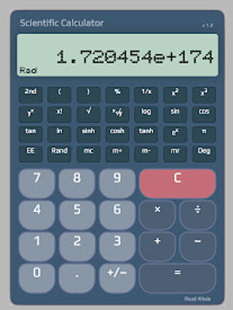
Embedded Calculator You can also use one of the following Texas Instruments calculators for the MP Continuing Certifying Exams.
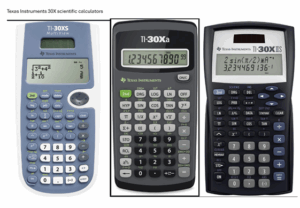
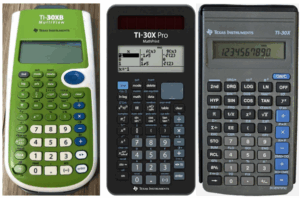
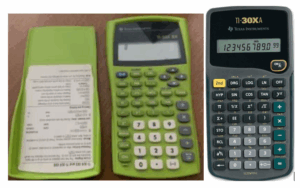
Important Rules:
- Outside the approved models, no other personal electronic, computing, or calculator devices are allowed in the exam area.
- The approved handheld models can’t have any notes, manually programmed formulas, or additional markings. Unauthorized markings must be covered with solid-colored tape.
- You can use the embedded calculator if you don’t have one of the required handheld calculators.
- On exam day, during check-in, you will be required to verify what calculator you are using.
Practicing with the Embedded Calculator:
- The embedded calculator is different from the approved handheld models. To familiarize yourself with it:
- Use the practice exam link in myABR after registering.
- If you’re not registered yet, download the Chrome Scientific Calculator extension.
Practice Exercises (for familiarity, not actual exam questions):
Try these to get comfortable with calculator functions:
- Logarithmic functions: Calculate the decay constant of 99mTc from its half-life of 6.02 hr.
- Trigonometric functions: Find the first spherical Bessel function (sin(x)/x) at 0.25 radians.
- Hyperbolic functions: Solve for y in the equation for the Gateway Arch:
y = 693.9 – 68.8 cosh(0.01x)
when x = 100 ft.
- Exponential decay: Determine the remaining activity of an 86-MBq 99mTc source after 14.6 hours.
- Memory function & Bateman equations: Calculate the 99mTc activity in a generator 4 hours after elution, given 99Mo decay parameters.
Exam Results and Current Scoring Status
Exam results will be available in myABR about one month after your exam. You’ll receive an email notification as soon as your results are posted.
While exams are being scored, a progress bar will appear on this page showing the current phase of the scoring process. Check back regularly after your exam for real-time updates.
Learn more about the exam results process.