ABR Staff Spotlight: Long-Time ABR Psychometrician Anthony Gerdeman Retires
By ABR Associate Director of Exam Services Lydia Warg
December 2025;18(6):10

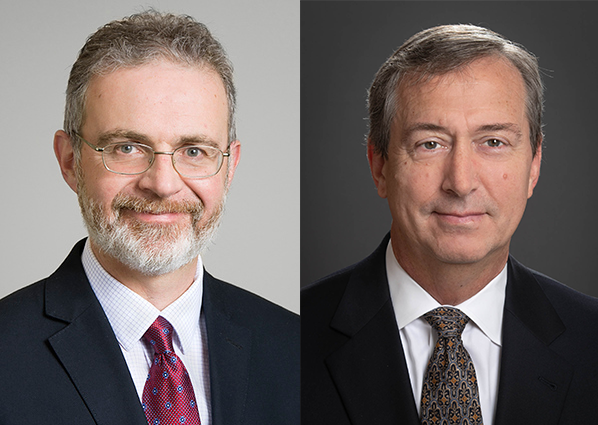
After almost 29 years as the ABR’s primary psychometrician and director of exam services, Anthony Gerdeman, PhD, is retiring. Current Director of Communications David Laszakovits will be taking over as director of exam services, and current Associate Director of Psychometrics Ben Babcock, PhD, will become the new director of psychometrics.
Anthony began as the ABR’s psychometrician in January 1997, when there were only six employees in the Tucson office. Then-Executive Director M. Paul Capp, MD, hired him to begin the move away from third-party vendors for the creation of qualifying and certifying exams. At that time, qualifying exams in diagnostic radiology, medical physics, and radiation oncology were being designed, scored, and analyzed by American College Testing, based at the University of Iowa. Exams were printed as booklets and accompanied by preprinted answer sheets. Candidates filled in bubbles and the answer sheets were fed through a scanner where the marks were converted to indicate correct or incorrect responses.
Oral exams were held in person at the Executive West Hotel in Louisville, Kentucky. Examiners brought their own cases and used view boxes to show films to candidates.
Primary certificates were good for the diplomate’s lifetime. Time-limited subspecialty certification in neuroradiology, nuclear radiology, pediatric radiology, and vascular and interventional radiology was in its infancy.
Anthony’s first goal was to standardize oral exam administration. This included creating a standard case set and scoring system. At the same time, the ABR moved away from view boxes for displaying images and hired a radiology technician to begin the process of digitizing film to administer exam content on computers. Even after exam images could be viewed on a computer monitor, paper books were issued to examiners. These contained explanations of each case and barcodes that could be scanned to display images.
Next came the computerized “written” exam. Anthony was instrumental in setting up the first computer exam center in the ABR’s former office space on the third floor of the Williams Center in Tucson. A development team, led by Dick Rovinelli from the American Board of Family Medicine, created the software used to administer ABR exams on computers. The radiation oncology recertification exam was the first to implement this software in 1999.
Software and technology continued to evolve throughout Anthony’s career at the ABR.
“Anthony has always been steady, kind, and clear-sighted about where to take us next, leading with no-drama professionalism,” said Yihong Ding, a senior data analyst in the psychometrics division. “With 29 years here, he knows how everything fits together and generously shares that context.”
In 2009, the Board changed the exam format for the qualifying and certifying exams in diagnostic radiology. The new computer-based “Exam of the Future” consisted of a single 657-item qualifying exam and a three-module, practice-profiled certifying exam.
In 2013, the ABR administered the last full Diagnostic Radiology Oral Certifying Exam in Louisville and the first Qualifying (Core) Exam at its Chicago and Tucson test centers. The first computer-based certifying exam was administered in September 2015. This transition was a monumental effort that wouldn’t have been possible without Anthony’s leadership.
During COVID, the ABR was required to transform its exams again, and began delivering all computer-based and oral exams remotely. As director of exam services, Anthony worked closely with the ABR’s IT department as they created software that enabled oral examiners and candidates to complete exams from their homes or offices. Anthony will miss the return to oral exams for diagnostic radiology in 2028, but he has left the organization poised to take that next step in the evolution of its exams.
Anthony was the ABR’s only psychometrician for about a decade, until one additional person was hired to assist with scoring and exam surveys. Recently, with an increased emphasis on research, data analysis, modernization of scoring processes, and exam security, the team has grown to four people. By establishing a legacy of embracing technology and maintaining strict standards for scoring the ABR’s exams, Anthony has set his team up for continued success long after he retires.
His contributions and kind demeanor will be remembered by his colleagues.
“One thing about Anthony was that he was always willing to make time. He never once made me feel like I was unimportant or unvalued,” said Dr. Babcock. “He is simply a pleasant person to work with. I only wish that I had met him earlier in my career!”