He Finds Medical Physics to Be a Sound Career
After the Titanic sank in 1912, it took 73 years for the wreckage to be found. What was considered cutting-edge sonar technology in 1985 was key to finding the ship at the bottom of the vast Atlantic Ocean.
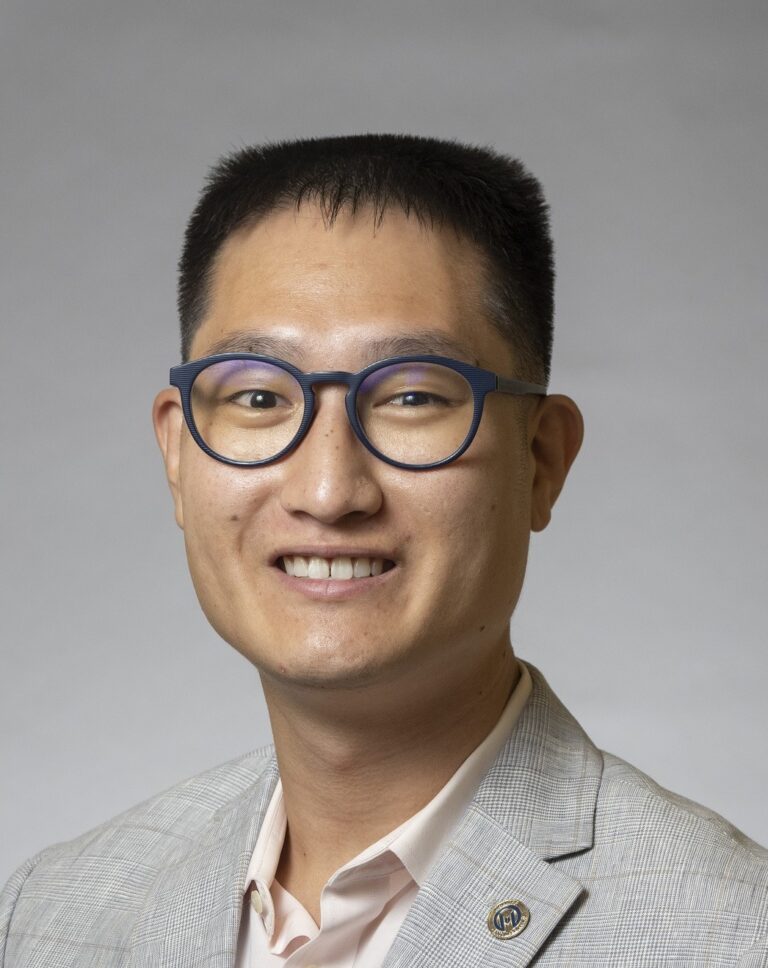
That search and the methods used inspired ABR volunteer Jaydev Dave, PhD, to pursue a career in medical physics (MP). The science of sound was music to his ears.
“I was reading a lot about it, and I was fascinated by how we could use sonar technology for different applications,” he said. “I also enjoy watching movies set on submarines. ‘The Hunt for Red October’ is one of my favorites.”

He’s keen to share his passion for medical physics at the Mayo Clinic in Rochester, Minnesota, where he serves as an associate professor and consultant in the department of radiology and is on faculty at the Mayo Clinic Graduate School of Biomedical Sciences.
“I recently spent time with a graduating senior from high school,” Dr. Dave said. “She was with us for six months and now she’s going to the University of Wisconsin, Madison for their (biomedical engineering) program. I work with high school students all the way up to radiology fellows and everything in between.”
Even with a busy schedule, he finds time to help as an ABR volunteer. Dr. Dave got involved in 2012 by answering an unexpected email from a committee chair.
Philip Heintz, PhD, was looking for ultrasound questions for the MP Part 2 Exam, so he reached out to his MP colleagues. Dr. Dave jumped in and sent 15 questions through the ABR’s portal, not knowing whether the effort would add up to anything.
“Months passed and I asked Dr. Heintz, ‘Hey, what happened to those questions? Did you use any?’” Dr. Dave said. “And he said, ‘The committee was so happy that they used all of them.’”
Impressed, Dr. Heintz asked Dr. Dave to join the committee and he gladly accepted. Fourteen years later, Dr. Dave’s CV is loaded with ABR duties: he’s associate chair of the MP Qualifying Exam Committee and serves as an oral examiner. He’s also been part of a test assembly committee and served as an Angoff participant.
Dr. Dave has found that developing content for exams taken by MP and diagnostic radiology (DR) candidates takes separate mindsets. Physics questions are just one element of the DR Qualifying (Core) Exam.
“For physics, we get into the nitty-gritty, the details of numerical equations, how some of those concepts are evolving in the clinic,” he said. “On the Core committee level, we are mostly looking at applications of those concepts.”
In his volunteer experience, Dr. Dave has seen the ABR make adjustments based on candidate feedback. Some modifications have come after examinee surveys or from one of the ABR’s Initial Certification advisory committees.
“As a candidate, knowing that your input is valued is important,” he said. “When I was a candidate, I thought no one was going to read my comments or my feedback. But it’s nice to see that it’s taken seriously.”
After working with Dr. Dave on the MP Part 2 Exam Committee for more than a decade, Thomas Oshiro, PhD, has formed a bond of friendship and mutual respect with his colleague.
“His depth of experience in all areas of medical imaging has allowed us to create well-designed content for the ABR,” Dr. Oshiro said. “More importantly, he’s been a trusted individual and a supportive colleague and, along with the other members of the committee, has made service to our profession a rewarding and fun experience.”
Being part of an ABR committee takes volunteers from their families for a few days at a time when in-person meetings are held in Chicago or Tucson. Dr. Dave and his colleagues find the process rewarding and the conversations held outside of meeting rooms to be important.
“The comradery is rewarding,” he said. “Each meeting that we have in person is sort of a grueling experience for a day and a half. But at the end of it, when you take the group photo, that punctuates everything that yes, the job was well done and it was appreciated by the ABR.”
Volunteering takes a lot of dedication, but Dr. Dave says it’s worth it.
“What’s most important is the satisfaction that you are giving back to the field,” he said. “The field has given you so many opportunities.”