Get Certified in Medical Physics (MP)
Learn the steps to becoming ABR board-certified in medical physics, including eligibility requirements and the exam process. Visit our alternate pathways page to explore prerequisites, eligibility requirements, and other details for the medical physics structured mentorship program pathway.
-
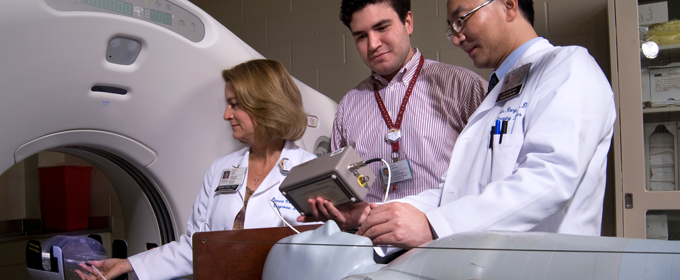
Medical physicists apply physics principles to medicine, often specializing in diagnostic imaging, nuclear medicine, or radiation therapy.
The MP certification process ensures you have the knowledge and skills to provide high-quality patient care. You’ll need to meet specific education, training, and exam requirements to be eligible for certification.
Eligibility Requirements
Part 1 Exam Eligibility
To take the Medical Physics Part 1 Qualifying Exam you must meet at least one of these criteria:
- Be enrolled and in good standing in a CAMPEP-accredited graduate, certificate, or doctor of medical physics (DMP) program. Your program director must confirm you’ll finish the required coursework before the exam.
- If enrolled in a CAMPEP-accredited certificate program, you must have completed a PhD by the time you register for the exam.
- Have graduated from a CAMPEP-accredited program (graduate, certificate, or DMP).
- Be enrolled in or have completed a CAMPEP-accredited residency.
- Be enrolled in an ABR-approved Structured Mentorship program.
Non-U.S./Canadian degrees:
If all your degrees are from outside the U.S. or Canada and you’re enrolled in (or have completed) a CAMPEP certificate or residency program, you’ll need a National Association of Credential Evaluation Services (NACES) credential evaluation sent directly to the ABR. Check NACES.org for a list of member organizations. You will need to request a “general” or “document” review.Part 1 Eligibility and Reapplying
Once approved to take Part 1, you have five years to pass the exam. After the five years is up, you can reapply following the same steps you took when originally applying, including paying all fees. You’ll get another five years to pass Part 1.
Part 2 Exam and Board Eligibility
You can take the Medical Physics Part 2 Qualifying Exam when:
- You’ve passed Part 1 (both General and Clinical).
- You have completed or are on track to complete a CAMPEP-accredited residency or DMP program by August 31, the year of the exam.
- You’ve started residency training within 10 years of passing Part 1.
- If you are enrolled in a three- or four-year residency program, you must complete the entire program before you are eligible, regardless of how the program is structured.
- You’ll be board eligible in diagnostic and nuclear medical physics if you complete a “2+1” residency (combining both specialties). You may pursue certification in only one specialty at a time. If your program focuses on one specialty during the first 24 months, you may be eligible for the Part 2 exam in this specialty. Once you’re certified in the first specialty and have completed the full 36 months of clinical training, you’ll be eligible for the Part 2 exam in the second specialty.
Board eligibility is the time from when you finish your residency training to when you receive initial board certification. You have six full calendar years from the completion of your residency or Part 2 approval, whichever comes first.
To learn more, read our Board Eligibility Policy.
Part 3 Exam Eligibility
You can take the Medical Physics Part 3 Oral Certifying Exam when:
- You’ve passed Part 1 (both General and Clinical).
- You’ve passed Part 2.
Get Certified in Another Specialty
Medical physicists have two options for pursuing certification in more than one specialty. If you’re enrolled in a CAMPEP-accredited “2+1” residency program, the process for becoming certified in diagnostic medical physics and nuclear medical physics is described above under the Part 2 Exam and Board Eligibility sections.
If you’re already certified in medical physics and want to pursue certification in another specialty, here’s what you need to do:
- Stay active in Continuing Certification
While getting certified in another specialty, you must actively participate in the Continuing Certification program for your existing medical physics certificate(s) and meet those requirements. That includes demonstrating competency and ethical standards.
- Complete clinical training in the new specialty
Training must be structured and supervised by an ABR-certified professional in that field. You’ll need to submit a signed and dated prospective training plan for ABR approval that covers:
- How you’ll complete the one-year training (it can be spread across multiple years).
- Topics, methods, and individuals involved in your training.
- How you’ll meet ABR training standards and develop core competencies.
Your training supervisor or program director must submit a signed attestation confirming completion of your training plan, including the dates of training.
Taking Leave
Personal and family needs are important during residency. We support you in taking leave when you need it.
To learn more, read our Residency Leave Policy.
- Be enrolled and in good standing in a CAMPEP-accredited graduate, certificate, or doctor of medical physics (DMP) program. Your program director must confirm you’ll finish the required coursework before the exam.
-
Apply for Certification
You’ll submit two applications for your medical physics certification: one for the Part 1 Exam and one for the Part 2 Exam. Once you’ve confirmed that you meet the eligibility requirements, you can apply for each exam during the designated application window.
Part 1 Exam:
New to the ABR? You can apply for the Part 1 Exam each year between the first business day in February and March 31. Please click here to start your application.
Part 2 Exam:
You can apply for the 2027 Part 2 Exam between the first business day in February and March 31, 2027. Please check back here during the application period to access the application.
Learn more about application and exam fees.
Apply for a Second Specialty
To apply to get certified in another specialty, you may submit an application at any time. You’ll need to complete at least one year of additional training after receiving ABR approval. Once your training is finished, your supervisor will be asked to submit an attestation confirming its completion.
-
Exam Process
Certification exams assess your knowledge, skills, and readiness for independent practice. The MP certification process includes three parts:
- Part 1 Qualifying Exam
- Part 2 Qualifying Exam
- Part 3 Oral Certifying Exam
You must pass Part 1 to be eligible for Part 2, and you must pass Part 2 to be eligible for Part 3. Once you’ve passed all three exams, you’ll be certified.
Part 1 Qualifying Exam
The first step in certification is the Part 1 Exam, a computer-based exam with two sections: General and Clinical. Both are based on the expected knowledge of a second-year graduate student. The sections can be taken in the same or different years.
- General section: Covers core medical physics concepts, consistent with the CAMPEP graduate standards, ethics, and professionalism.
- Clinical section: Tests knowledge in anatomy, medical terminology, physiology, and radiobiology.
Exam Format, Timing, and Scoring
Format
This computer-based exam is administered in two sessions on two separate days. The General section takes approximately five hours and the Clinical section takes approximately three hours.
Explore exam formats in more depth in the MP Qualifying Exam Guide, including a breakdown of how many questions are in each section.
Timing
The ABR offers the Part 1 Exam once a year (typically in August).
Scoring
The Part 1 Exam is scored using a criterion-referenced scoring method. Your score is based on how well you do compared with a fixed standard — not how everyone else does.
Each section of the Part 1 Qualifying Exam is scored as a whole, and the result is either pass or fail.
- If you don’t meet the standard, you must retake that entire section of the exam.
- You must pass both sections to pass overall. You can retake them separately if you only fail one.
Learn more about exam scoring.
Part 2 Qualifying Exam
The Part 2 Exam is also computer-based and focuses on your specialty: Diagnostic Medical Physics, Therapeutic Medical Physics, or Nuclear Medical Physics.
It covers knowledge gained during a CAMPEP-accredited medical physics residency and assesses a broad understanding of the field.
Exam Format, Timing, and Scoring
Format
This computer-based exam takes approximately five hours, delivered in one session. Explore exam formats in more depth in the MP Qualifying Exam Guide, including a breakdown of how many questions are in each section.
Timing
The ABR offers the Part 2 Exam once a year (typically in August).
Scoring
The Part 2 exams are scored using a criterion-referenced scoring method. Your score is based on how well you do compared with a fixed standard — not how everyone else does.
The Part 2 exams are scored as a whole, and the result is either pass or fail.
- All categories must be passed together.
- If you don’t meet the standard, you must retake the entire exam.
Learn more about exam scoring.
Part 3 Oral Certifying Exam
The final step is the Part 3 Oral Certifying Exam, designed to test your ability to apply medical physics knowledge in a clinical setting. Five experts will examine you, each asking questions from five key categories. The focus is on clinical judgment, communication, and real-world decision-making.
Exam Format, Timing, and Scoring
Format
This remote oral exam takes approximately four hours and is delivered in one session. Explore exam formats in more depth in the Oral Certifying Exam Guide, including a breakdown of how many questions are in each section.
Timing
The ABR typically offers the Part 3 Exam twice a year.
Scoring
The Part 3 Oral Exam is scored using a criterion-referenced scoring method. Your score is based on how well you do compared with a fixed standard — not how everyone else does.
Part 3 Oral Certifying Exam is scored by content category, and the result is pass, conditional pass, or fail.
- If you fail one of the five categories, you’ll receive a conditional pass and only need to retake the portion you did not pass—not the entire exam. Two examiners will re-examine you, asking questions over two 30-minute sessions within the category you failed. If both pass you, the condition will be removed.
- If you fail two or more categories, you’ll need to retake the entire exam.
Learn more about exam scoring.
-
Exam Registration
Once you’re eligible to take an exam, the ABR will send you an email invitation two months before your Part 1 or Part 2 Exam, or five months before your Part 3 Exam. Invitations will include instructions on completing registration in myABR.
To ensure you receive these emails, update your contact information, add @theabr.org to your approved senders list, and keep an eye on your spam folder.
Before registering for an exam, you’ll need to pay all exam fees.
-
Exam Preparation
Experienced volunteers from all practice settings create ABR exams. We offer content guides and exam blueprints to help you prepare, but you’ll need to find the study materials that work for you. Keep in mind that materials from other organizations won’t always match the format, scope, or difficulty of ABR exams.
To learn more about how exams are created and scored, please see:
- Information for volunteers – how volunteers create exam questions
- Illustrated life cycle of an ABR exam item– a look at the extensive QA process that each question goes through
- Exam scoring and results – how we evaluate your exam
Studying for MP Exams
Not every question in the medical physics exams will match the content guides exactly, and since each exam has a limited number of questions, you’ll only see a sample of the broader material. Think of each guide as a helpful reference, not a question-by-question preview.
Content Guides
- Part 1 Exam Content Guide
- Part 2 Exam Content Guide Diagnostic Medical Physics
- Part 2 Exam Content Guide Nuclear Medical Physics
- Part 2 Exam Content Guide Therapeutic Medical Physics
- Constants and Physical Values
- Qualifying Exam Guide
- Part 3 Exam Content Guide Diagnostic Medical Physics
- Part 3 Exam Content Guide Nuclear Medical Physics
- Part 3 Exam Content Guide Therapeutic Medical Physics
- Oral Exam Reenactment Videos
- Oral Certifying Exam Guide
- Professionalism & Ethics Content Guide (all parts)
Exam Readiness Checks
After you’ve registered for an upcoming computer-based exam, you’ll receive a link to the Exam Readiness Check. You can also access it by logging in to myABR.
This quick check helps you get comfortable with the exam interface, navigation, and tools before your exam day.
Here’s how it works:
- Do the readiness check exactly like you’ll take the exam – on the same computer and in the same location.
- Once you’ve launched the readiness check, a quick technical verification will check your camera, microphone, internet, and software. Learn more about technical requirements for remote exams.
- You’ll be required to complete an identification check by scanning your ID and taking a selfie.
If you change computers or locations before exam day, we recommend repeating the check to ensure everything works as expected.
Sample Questions
Once you complete the Exam Readiness Check, you’ll get access to a set of sample questions. They’ll help you get familiar with the different question formats you can expect on the exam, such as:
- Multiple-choice – Most questions follow this format.
- Drag and Drop – You’ll have to identify an anatomical site, equipment component, or a region on a graph by clicking on the correct spot in an image.
While taking your exam, you can flag items within sections to go back to if you have time. Once you leave a section, you cannot return to it.
Answer Sheets for Sample Questions
- Medical Physics Part 1 Exam Sample Questions Answer Sheet
- Medical Physics DMP Part 2 Exam Sample Questions Answer Sheet
- Medical Physics NMP Part 2 Exam Sample Questions Answer Sheet
- Medical Physics TMP Part 2 Exam Sample Questions Answer Sheet
Using Calculators in Exams
The ABR provides an embedded calculator within the exam interface.
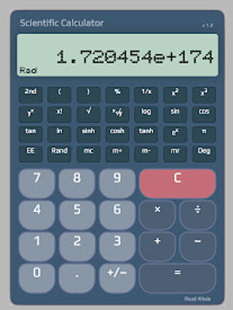
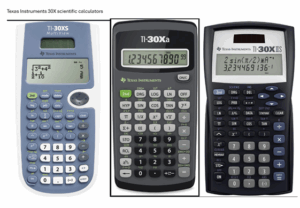
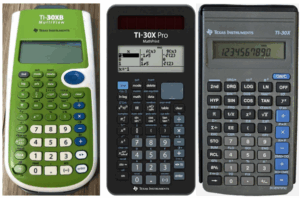
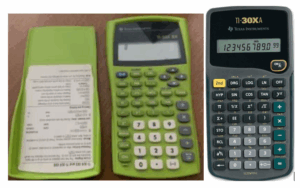
Embedded Calculator You can also use one of the following Texas Instruments calculators for the MP Parts 1 and 2 Qualifying Exams. No calculator is needed for the Part 3 Oral Certifying Exam.
Important Rules:
- Outside the approved models, no other personal electronic, computing, or calculator devices are allowed in the exam area.
- The approved handheld models can’t have any notes, manually programmed formulas, or additional markings. Unauthorized markings must be covered with solid-colored tape.
- You can use the embedded calculator if you don’t have one of the required handheld calculators.
- On exam day during check-in, you will be required to verify what calculator you are using.
Practicing with the Embedded Calculator:
- The embedded calculator is different from the approved handheld models. To familiarize yourself with it:
- Use the practice exam link in myABR after registering.
- If you’re not registered yet, download the Chrome Scientific Calculator extension.
Practice Exercises (for familiarity, not actual exam questions):
Try these to get comfortable with calculator functions:
- Logarithmic functions: Calculate the decay constant of 99mTc from its half-life of 6.02 hr.
- Trigonometric functions: Find the first spherical Bessel function (sin(x)/x) at 0.25 radians.
- Hyperbolic functions: Solve for y in the equation for the Gateway Arch:
y = 693.9 – 68.8 cosh(0.01x)
when x = 100 ft.
- Exponential decay: Determine the remaining activity of an 86-MBq 99mTc source after 14.6 hours.
- Memory function & Bateman equations: Calculate the 99mTc activity in a generator 4 hours after elution, given 99Mo decay parameters.
-
Current Scoring Status
Exam results are available in myABR about one month after an exam. You’ll receive an email notification as soon as your results are posted.
While qualifying exams are being scored, a progress bar will appear on this page showing the current phase of the scoring process. Check back regularly after your exam for real-time updates.
Learn more about ABR exam scoring and results.
-
History of Aggregate Exam Results
To help you understand the typical performance of first-time takers on MP exams, we’ve compiled tables showing pass rates from recent qualifying and certifying exams.
Qualifying Exams
Part 1
First-Time Takers Enrolled in a CAMPEP Program
General
Exam Dates1 Percentage Passed Total First-Time Takers 2015 73 199 2016 64 239 2017 60 219 2019 62 190 20202 58 184 2021 50 94 2022 57 117 20233 64 359 2024 68 275 2025 67 310 1Numbers from the 2018 exam are not available because of an inconsistency in the test administration.
2Results include December 2020 and April 2021 administrations.
3Results include January 2023 and August 2023 administrations.
Clinical
Exam Dates1 Percentage Passed Total First-Time Takers 2015 73 199 2016 71 239 2017 64 219 2019 79 190 20202 69 182 2021 64 94 2022 73 117 20233 75 361 2024 71 273 2025 77 308 1Numbers from the 2018 exam are not available because of an inconsistency in the test administration.
2Results include December 2020 and April 2021 administrations.
3Results include January 2023 and August 2023 administrations.
Part 2
First-Time Takers Enrolled in a CAMPEP Program
Exam Dates1 Percentage Passed Total First-Time Takers 2015 84 190 2016 83 185 2017 89 202 2019 93 193 20202 83 173 2021 74 152 2022 86 193 2023 73 190 2024 78 178 2025 86 182 1Numbers from the 2018 exam are not available because of an inconsistency in the test administration.
2Results include December 2020 and April 2021 administrations.
Certifying Exam
Part 3 Oral
First Time-Takers
Year Percent Passed Percent Failed Percent Conditioned Total First-Time Takers 2018 60 20 20 228 2019 70 22 8 227 2021 63 23 14 364 2022 79 10 11 121 2023 58 26 16 188 2024 67 14 18 146 2025 63 19 18 145 2026 58 26 16 192