Get Certified in Subspecialties
Explore subspecialties available through the ABR for diagnostic radiology, interventional radiology, and radiation oncology candidates.
-
Getting certified in a subspecialty can offer specialized and unique opportunities to deliver patient care. There are several subspecialties available depending on what you’re already initially certified in:
- Diagnostic radiology and interventional radiology: neuroradiology, nuclear radiology, pain medicine, and pediatric radiology.
- Radiation oncology: pain medicine.
Explore available subspecialties, eligibility requirements, and how to get certified in each.
Neuroradiology
A neuroradiologist diagnoses and treats disorders of the brain, sinuses, spine, spinal cord, neck, and central nervous system, such as aging and degenerative diseases, seizure disorders, cancer, stroke, cerebrovascular diseases, and trauma.
About the Exam
The Neuroradiology Subspecialty Exam is a one-day remote computer-based exam with 180 image-rich questions, lasting approximately four hours.
Exam Timing and Scoring
The ABR offers this exam once a year (typically in August). View upcoming exam dates.
The exam is scored using a criterion-referenced scoring method. Your score is based on how well you do compared with a fixed standard — not how everyone else does.
The neuroradiology exam is scored by content category, and the result is pass, conditional pass, or fail.
- If you fail one category, you’ll receive a conditional pass and you’ll only need to retake the portions you did not pass — not the entire exam.
- If you fail two or more categories, you’ll need to retake the entire exam.
Learn more about exam scoring.
Eligibility and Requirements
You have six calendar years from when you completed training to obtain certification.
Before you apply, you’ll need to:
- Hold an ABR specialty certificate in general radiology, diagnostic radiology, or interventional radiology/diagnostic radiology.
- Complete one year of a neuroradiology fellowship accredited by the Accreditation Council for Graduate Medical Education (ACGME) or the Royal College of Physicians and Surgeons of Canada (RCPSC) and provide a certificate or letter from your program director as documentation.
- Provide a current, valid medical license with expiration date.
- Complete one year of practice or additional approved training, with at least one-third of that year spent in neuroradiology.
- Provide practice experience verification from the chief of service or department chair (including dates and percentage of time devoted to neuroradiology).
- Pay any outstanding ABR fees.
Alternate Pathway
If you haven’t completed an accredited fellowship, you might still qualify for subspecialty certification via an alternate pathway.
To be eligible for an alternate pathway, you’ll need to:
- Be certified in general radiology, diagnostic radiology, or interventional radiology/diagnostic radiology.
- Serve on the subspecialty faculty at a single institution with an ACGME- or RCPSC-accredited fellowship in your discipline for:
- Two consecutive years at 1.0 FTE (with at least 75% discipline-relevant clinical time) or three consecutive years at 1.0 FTE (with at least 50% discipline-relevant clinical time).
- ≥ 0.6 FTE part-time work is also eligible — contact the ABR for more information.
If your initial primary certification was through the International Medical Graduate Alternate Pathway, you cannot count training you did prior to or as part of the Sponsoring Department Agreement toward your subspecialty certification.
Submit an application form to the ABR within the application timeframe (below) to see if you qualify for the alternate pathway.
How to Apply
Applications for certification in neuroradiology are available in myABR from February 1 through April 30 each year. Once your application is approved, you’ll get an invitation to register for the exam.
Exam Preparation
Experienced volunteers from all practice settings create ABR exams. We offer study guides to help you prepare, but you’ll need to find the study materials that work for you. Keep in mind that materials from other organizations won’t always match the format, scope, or difficulty of ABR exams.
To learn more about how exams are created and scored, please see:
- Information for volunteers – how volunteers create exam questions
- Illustrated life cycle of an ABR exam item– a look at the extensive QA process that each question goes through
- Exam scoring and results – how we evaluate your exam
Studying for the Exam
Preparation for the Neuroradiology Exam starts with understanding how the material is organized across key practice areas. Your exam includes three main categories: brain, spine, and head and neck. To support your preparation, the neuroradiology study guide offers an outline of topics that may be covered. Keep in mind that this guide is a general overview and not an exhaustive list.
Exam Readiness Checks
After you’ve registered for an upcoming computer-based exam, you’ll receive a link to the Exam Readiness Check. You can also access it by logging in to myABR.
This quick check helps you get comfortable with the exam interface, navigation, and tools before your exam day.
Here’s how it works:
- Do the readiness check exactly like you’ll take the exam – on the same computer and in the same location.
- Once you’ve launched the readiness check, a quick technical verification will check your camera, microphone, internet, and software. Learn more about technical requirements for remote exams.
- You’ll be required to complete an identification check by scanning your ID and taking a selfie.
If you change computers or locations before exam day, we recommend repeating the check to ensure everything works as expected.
Current Scoring Status
Exam results are available in myABR about one month after your exam. You’ll receive an email notification as soon as your results are posted.
While exams are being scored, a progress bar will appear on this page showing the current phase of the scoring progress. Check back regularly after your exam for real-time updates.
Learn more about ABR exam scoring and results.
History of Aggregate Exam Results
To help you understand the typical performance of first-time takers on the neuroradiology exam, we’ve compiled tables showing pass rates from recent exams.
Neuroradiology Subspecialty Exam
First-Time Takers
Year Percent Passed Percent Failed Percent Conditioned Total First-Time Takers 2013 – 2015 89 — — 181 2016 84 4 12 158 2017 81 8 11 216 2018 95 1 4 232 2019 79 9 12 183 2021 (April) 80 10 10 166 2021 (September) 74 11 15 115 2022 93 4 3 236 2023 90 3 7 186 2024 75 10 15 230 2025 92 1 7 259 -
Nuclear Radiology
Nuclear radiologists use tracer quantities of radionuclides (radiopharmaceuticals) to create diagnostic images and gather physiological data to diagnose and treat a wide range of benign and malignant conditions in adults and children.

About the Exam
The Nuclear Radiology Subspecialty Exam is a one-day remote computer-based exam with 180 image-rich questions, lasting approximately four hours.
Exam Timing and Scoring
The ABR offers this exam once a year (typically in January). View upcoming exam dates.
The exam is scored using a criterion-referenced scoring method. Your score is based on how well you do compared with a fixed standard — not how everyone else does.
The Nuclear Radiology exam is scored as a whole, and the result is either pass or fail. If you don’t meet the standard, you must retake the entire exam. Learn more about exam scoring.
Eligibility and Requirements
You have six calendar years from when you completed training to obtain certification.
Before you apply, you’ll need to:
- Hold an ABR specialty certificate in general radiology, diagnostic radiology, or interventional radiology/diagnostic radiology.
- Complete one year of training in a nuclear radiology fellowship or nuclear medicine residency program accredited by the Accreditation Council for Graduate Medical Education (ACGME) or the Royal College of Physicians and Surgeons of Canada (RCPSC) and provide a certificate or letter from your program director as documentation.
- Provide a current, valid medical license with expiration date.
- Pay any outstanding ABR fees.
Alternate Pathways
If you haven’t completed an accredited fellowship, you might still qualify for subspecialty certification via an alternate pathway.
To be eligible for an alternate pathway, you’ll need to:
- Be certified in general radiology, diagnostic radiology, or interventional radiology/diagnostic radiology.
- Serve on the subspecialty faculty at a single institution with an ACGME- or RCPSC-accredited fellowship in your discipline, a nuclear radiology fellowship, or an established 16-month ABR Pathway for:
- Two consecutive years at 1.0 FTE (with at least 75% discipline-relevant clinical time) or three consecutive years at 1.0 FTE (with at least 50% discipline-relevant clinical time).
- ≥ 0.6 FTE part-time work is also eligible — contact the ABR for more information.
If your initial certification was through the International Medical Graduate Alternate Pathway, you cannot count training you did prior to or as part of the Sponsoring Department Agreement toward your subspecialty certification.
Submit an application form to the ABR within the application timeframe (below) to see if you qualify for the alternate pathway.
Nuclear Radiology 16-Month Pathway
The 16-month pathway offers a streamlined route for diagnostic radiology (DR) residents to earn both specialty certification in DR and subspecialty certification in nuclear radiology — all within their residency.
You can apply for this pathway if:
- During your four-year ACGME- or RCPSC-accredited residency, you complete a total of 16 months of training in nuclear radiology, nuclear medicine, molecular imaging, radiotheranostics, or radiopharmaceutical therapy.
- You submit an application and Sponsoring Department Agreement (SDA) at least six months before finishing DR residency.
The 16 months can be spread throughout residency (no need to be consecutive) and must comprise:
- Four months of nuclear radiology/nuclear medicine (already required in DR residency).
- Eight months of dedicated nuclear radiology, nuclear medicine, molecular imaging, radiotheranostics, or radiopharmaceutical therapy.
- A final four months in a related imaging field (e.g., oncology, musculoskeletal, thoracic, or neuroradiology) or additional nuclear radiology training.
- Up to two NR/NM months from a pre-radiology training year(s) may count toward the 16 months if performed at an institution with an ACGME-accredited DR residency program (with supporting documentation).
Training must include:
- Hands-on experience with SPECT/CT and PET/CT imaging.
- Exposure to pediatric cases (neonates, infants, children, adolescents).
- Completion of NRC requirements for handling unsealed radioactive materials, including:
- 200+ hours of classroom and lab training.
- Specific case experience, such as thyroid treatment and radiopharmaceutical therapies.
You’ll follow the same exam schedule and board eligibility time limits as the nuclear radiology subspecialty certification outlined on this page.
How to Apply
Applications for certification in nuclear radiology are available in myABR from November 1 through December 12 each year. Once your application is approved, you’ll get an invitation to register for the exam.
Exam Preparation
Experienced volunteers from all practice settings create ABR exams. We offer a study guide to help you prepare, but you’ll need to find the study materials that work for you. Keep in mind that materials from other organizations won’t always match the format, scope, or difficulty of ABR exams.
To learn more about how exams are created and scored, please see:
- Information for volunteers – how volunteers create exam questions
- Illustrated life cycle of an ABR exam item– a look at the extensive QA process that each question goes through
- Exam scoring and results – how we evaluate your exam
Studying for the Exam
Preparation for the Nuclear Radiology Exam starts with understanding how the material is organized across key practice areas. To support your preparation, the nuclear radiology study guide offers an outline of topics that may be covered. Keep in mind that this guide is a general overview and not an exhaustive list.
Exam Readiness Checks
After you’ve registered for an upcoming computer-based exam, you’ll receive a link to the Exam Readiness Check. You can also access it by logging in to myABR.
This quick check helps you get comfortable with the exam interface, navigation, and tools before your exam day.
Here’s how it works:
- Do the readiness check exactly like you’ll take the exam – on the same computer and in the same location.
- Once you’ve launched the readiness check, a quick technical verification will check your camera, microphone, internet, and software. Learn more about technical requirements for remote exams.
- You’ll be required to complete an identification check by scanning your ID and taking a selfie.
If you change computers or locations before exam day, we recommend repeating the check to ensure everything works as expected.
Current Scoring Status
Exam results are available in myABR about one month after your exam. You’ll receive an email notification as soon as your results are posted.
When exams are being scored, a progress bar will appear on this page showing the current phase of the scoring process. Check back regularly after your exam for real-time updates.
Learn more about ABR exam scoring and results.
History of Aggregate Exam Results
To help you understand the typical performance of first-time takers on the Nuclear Radiology Exam, we’ve compiled tables showing pass rates from recent exams.
Nuclear Radiology Subspecialty Exam
First-Time Takers
Year Percent Passed Total First-Time Takers 2016 67 3 2017 100 5 2018 100 6 2019 100 4 2021 (April) 100 9 2021 (September) 86 7 2022 95 19 2023 100 14 2024 92 13 2025 81 21 2026 96 25 -
Pediatric Radiology
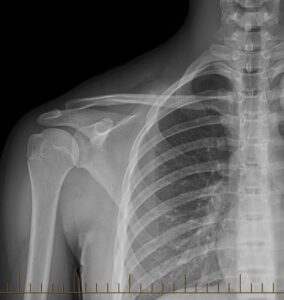
Pediatric radiologists use imaging and interventional procedures related to the diagnosis, care, and management of congenital abnormalities (those present at birth) and diseases particular to infants and children. They also treat diseases that begin in childhood and can cause impairments in adulthood.
About the Exam
The Pediatric Radiology Subspecialty Exam is a one-day, remote computer-based exam with 180 image-rich questions, lasting approximately four hours.
Exam Timing and Scoring
The ABR offers this exam once a year (typically in January). View upcoming exam dates.
The exam is scored using a criterion-referenced scoring method. Your score is based on how well you do compared with a fixed standard — not how everyone else does.
The Pediatric Radiology exam is scored as a whole, and the result is either pass or fail. If you don’t meet the standard, you must retake the entire exam. Learn more about exam scoring.
Eligibility and Requirements
You have six calendar years from when you completed training to obtain certification.
Before you apply, you’ll need to:
- Hold an ABR specialty certificate in general radiology, diagnostic radiology, or interventional radiology/diagnostic radiology.
- Complete one year of a pediatric radiology fellowship (after residency) accredited by the Accreditation Council for Graduate Medical Education (ACGME) or the Royal College of Physicians and Surgeons of Canada (RCPSC) and provide a certificate or letter from your program director as documentation.
- Provide a current, valid medical license with expiration date.
- Pay any outstanding ABR fees.
Alternate Pathways
If you haven’t completed an accredited fellowship, you might still qualify for subspecialty certification via an alternate pathway.
If you don’t earn your pediatric radiology certification before your board eligibility expires, you can become certified via the alternate pathway for a limited time.
To be eligible for an alternate pathway, you’ll need to:
- Be certified in general radiology, diagnostic radiology, or interventional radiology/diagnostic radiology.
- Practice pediatric radiology at a single institution for:
- Two consecutive years at 1.0 FTE (with at least 75% discipline-relevant clinical time) or three consecutive years at 1.0 FTE (with at least 50% discipline-relevant clinical time).
- ≥ 0.6 FTE part-time work is also eligible — contact the ABR for more information.
If your initial certification was through the International Medical Graduate Alternate Pathway, you cannot count training you did prior to or as part of the Sponsoring Department Agreement toward your subspecialty certification.
Submit an application form to the ABR within the application timeframe (below) to see if you qualify for an alternate pathway.
Pediatric Radiology 15-Month Pathway
The 15-month pathway provides an opportunity for diagnostic radiology (DR) residents to qualify for both DR specialty certification and pediatric radiology subspecialty certification without a separate fellowship.
You can apply if:
- During your four-year residency, you complete 15 months of pediatric radiology training at an ACGME- or RCPSC-accredited DR program.
- You and your program submit an application and Sponsoring Department Agreement (SDA) at least six months before finishing your residency.
It’s recommended you notify your program director and pediatric preceptor at least 18 months before graduation to ensure your training plan meets SDA requirements.
The 15 months can be spread throughout your residency (no need to be consecutive) and must include:
- 12 months of core pediatric radiology rotations, with an average of more than 80% of cases in pediatric patients.
- Up to three additional months of pediatric-related training, which may include either:
- Further pediatric radiology subspecialty training.
- Related rotations (e.g., adult cardiac imaging with pediatric relevance).
Research rotations are not accepted, and related adult-focused rotations must include substantial pediatric exposure.
Your clinical experience must cover:
- All major imaging modalities: radiography, fluoroscopy, ultrasound, CT, MRI, nuclear medicine/molecular imaging (NMMI), and interventional procedures.
- Key pediatric subspecialty areas: neuroradiology, body imaging, fetal imaging, cardiovascular imaging, musculoskeletal imaging, and NMMI.
- A full age range: fetal, neonatal, infant, child, and adolescent patients.
- Normal developmental anatomy and a spectrum of pediatric disorders.
Your training must be supervised by a board-certified pediatric radiologist (ABR-certified in the subspecialty) throughout the entire pathway. If your program loses its pediatric radiology-certified faculty during your pathway, the program cannot continue.
You’ll follow the same exam schedule and board eligibility time limits as the pediatric radiology subspecialty certification outlined on this page.
How to Apply
Applications for certification in pediatric radiology are available in myABR from November 1 through December 12 each year. Once your application is approved, you’ll get an invitation to register for the exam.
Exam Preparation
Experienced volunteers from all practice settings create ABR exams. We offer study guides to help you prepare, but you’ll need to find the study materials that work for you. Keep in mind that materials from other organizations won’t always match the format, scope, or difficulty of ABR exams.
To learn more about how exams are created and scored, please see:
- Information for volunteers – how volunteers create exam questions
- Illustrated life cycle of an ABR exam item– a look at the extensive QA process that each question goes through
- Exam scoring and results – how we evaluate your exam
Studying for the Exam
Preparation for the Pediatric Radiology Exam starts with understanding how the material is organized across key practice areas. To support your preparation, the pediatric radiology study guide offers an outline of topics that may be covered. Keep in mind that this guide is a general overview and not an exhaustive list.
Exam Readiness Checks
After you’ve registered for an upcoming computer-based exam, you’ll receive a link to the Exam Readiness Check. You can also access it by logging in to myABR.
This quick check helps you get comfortable with the exam interface, navigation, and tools before your exam day.
Here’s how it works:
- Do the readiness check exactly like you’ll take the exam – on the same computer and in the same location.
- Once you’ve launched the readiness check, a quick technical verification will check your camera, microphone, internet, and software. Learn more about technical requirements for remote exams.
- You’ll be required to complete an identification check by scanning your ID and taking a selfie.
If you change computers or locations before exam day, we recommend repeating the check to ensure everything works as expected.
Current Scoring Status
Exam results are available in myABR about one month after your exam. You’ll receive an email notification as soon as your results are posted.
When exams are being scored, a progress bar will appear on this page showing the current phase of the scoring process. Check back regularly after your exam for real-time updates.
Learn more about ABR exam scoring and results.
History of Aggregate Exam Results
To help you understand the typical performance of first-time takers on the Pediatric Radiology exam, we’ve compiled tables showing pass rates from recent exams.
Pediatric Radiology Subspecialty Exam
First-Time Takers
Year Percent Passed Total First-Time Takers 2016 98 59 2017 100 71 2018 100 53 2019 100 59 2021 (April) 95 40 2021 (September) 92 24 2022 100 49 2023 100 57 2024 100 34 2025 100 61 2026 100 45 -
Pain Medicine
Pain medicine specialists provide care for patients with acute, chronic, and cancer-related pain in both inpatient and outpatient settings. This subspecialty involves collaborating with other specialists to ensure comprehensive patient care.
How Certification Works
The American Board of Anesthesiology administers the exam. However, ABR diplomates who pass receive certification through the ABR.
About the Exam
The Pain Medicine Subspecialty Exam is a half-day, computer-based exam of 200 multiple-choice questions.
Visit the ABA website for study resources such as content outlines, blueprints, and sample questions.
Eligibility & Requirements
To be eligible, you must:
- Be certified in diagnostic radiology, radiation oncology, or interventional radiology/diagnostic radiology.
- Complete a one-year Pain Medicine Fellowship accredited by the Accreditation Council for Graduate Medical Education (ACGME).
- Hold a valid, unrestricted medical license.
- Pay any outstanding ABR fees.
You have six years to achieve certification from when you completed training.
How to Apply
- Log in to myABR to clear any outstanding fees.
- Applications are accepted each year from December 1 through June 30. The application form is available here.
- With your application, submit an official Pain Medicine Fellowship certificate or a letter from your program director confirming your training.
- After submission, you’ll receive an email from the ABR with instructions on paying your application fee.
-
Certification and Continuing Requirements
Once certified, you’ll receive a continuous ABR subspecialty certificate in your relevant discipline.
You’ll need to meet the ABR’s Continuing Certification program requirements to maintain your certification.
-
Subspecialties No Longer Issued
Hospice and Palliative Medicine
The ABR no longer offers certification in hospice and palliative medicine. If you’re interested in this subspecialty, you must go through the American Board of Internal Medicine (ABIM).
You’re eligible for this subspecialty if you’re certified in:
- Radiation oncology
- General radiology
- Diagnostic radiology
- Interventional radiology
For more details on certification, eligibility, and maintaining your certificate, check out the ABIM Hospice and Palliative Medicine Certification page. You can also verify certification status on the ABMS Certification Matters website.
Vascular and Interventional Radiology
The last vascular and interventional radiology certification was issued in 2016. It’s been replaced by specialty certification in interventional radiology/diagnostic radiology (IR/DR).