Volunteer Brings International Perspective to Her Duties
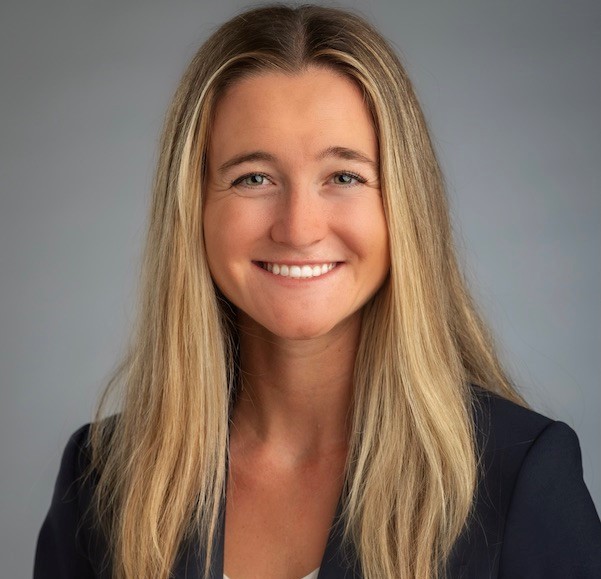
Merve Ozen, MD, brings something different to her role on the ABR Interventional Radiology/Diagnostic Radiology (IR/DR) Initial Certification Advisory Committee (ICAC).
Dr. Ozen is the first International Medical Graduate (IMG) to serve on the committee. Born in Türkiye, she came to the United States after earning her medical degree. Like other IMGs, her journey to gaining board certification took extra time and dedication.
“I completed four years of fellowship, including two years dedicated to IR, which counted toward my DR board certification,” she said. “After that, as an attending, I spent two years at an academic ACGME-accredited IR program and submitted my case logs. Once those requirements were met, I became eligible to take the IR Certifying Exam.”

Studying for and taking exams was a way of life in Türkiye. Dr. Ozen said placement in medical school relied heavily on how you performed on standardized tests.
“There’s no space for extracurricular activities or volunteering,” she said. “All you do is study, study, study. You go to school, you come home, and there is tutoring or courses you have to attend. It was a 12-hour day, and you do that during the weekend, too.”
Dr. Ozen earned her medical degree from Cukurova University School of Medicine in Adana, Türkiye, in 2010. She completed diagnostic radiology residency training, including time as chief resident, at Baskent University School of Medicine in Adana in 2015.
Her work paid off and she moved to the U.S. in 2016, where she completed fellowships in vascular and interventional radiology, advanced vascular and interventional radiology, neuroradiology, and body imaging at Rush University Medical Center in Chicago.
“Everybody was going through the same thing,” she said of her long days spent studying in Türkiye. “I appreciate those times. If I didn’t get that education, that confidence, those exam-taking abilities, I wouldn’t have come here.”
Going through long days cooped up studying and taking exams made Dr. Ozen crave a more active lifestyle. Once she finished her training, she earned a brown belt in aikido. Now an interventional radiologist at Mayo Clinic Arizona in Scottsdale, she enjoys hiking and recently started running and playing pickleball. She also was recruited to take part in a Dancing with the Stars competition in Phoenix that raises money for the National Kidney Foundation.
“All I want to do is physical activities and try everything possible because my childhood and youth was spent studying and preparing for exams,” she said.
She also makes time to volunteer on the ABR’s IR/DR ICAC. Dr. Ozen joined the group this year as a representative of the Society of Interventional Radiology (SIR) Early Career Section.
After two meetings with the committee, she’s already clear on the mission.
“We’re a bridge to the examinees,” she said. “Technical steps can be very specific, very detailed, and it might be difficult for the exam takers to interpret what’s going on behind the scenes.”
In addition to giving candidates information about exams, committee members also relay candidates’ thoughts back to the ABR.
As a physician who works with residents, Dr. Ozen is a calming influence on those who are concerned about taking ABR exams.
“I tell my trainees that exam questions are asked from their daily experience,” she said. “If a trainee is doing their daily work in a good environment, studying for their daily cases, reviewing the cases, and reading, it’s not going to be hard for them to study for the Qualifying or Certifying exams.”
Having earned her board certification in 2022, Dr. Ozen mostly works with more experienced physicians on the committee. But they all have things in common: They worked hard to earn certification and have perspectives that the ABR needs as it enhances its exam processes.
“I think having people on board who have already taken the exam gives you a diversified opinion about how it has changed or how it can be reformed,” she said.
James Spies, MD, the ABR’s associate executive director for interventional radiology, is the advisory committee’s chair. He hasn’t worked long with Dr. Ozen, but he’s seen her value.
“She is an active participant with good suggestions and insights,” he said.
A year into her appointment, Dr. Ozen was surprised to learn about her unique position on the committee. Her perspective as an IMG complements those from U.S.-trained physicians in the group.
“I didn’t realize I was the first IMG on the committee,” she said. “That’s exciting and encouraging.”