He Still Enjoys Teaching a ‘Super Cool’ Subject
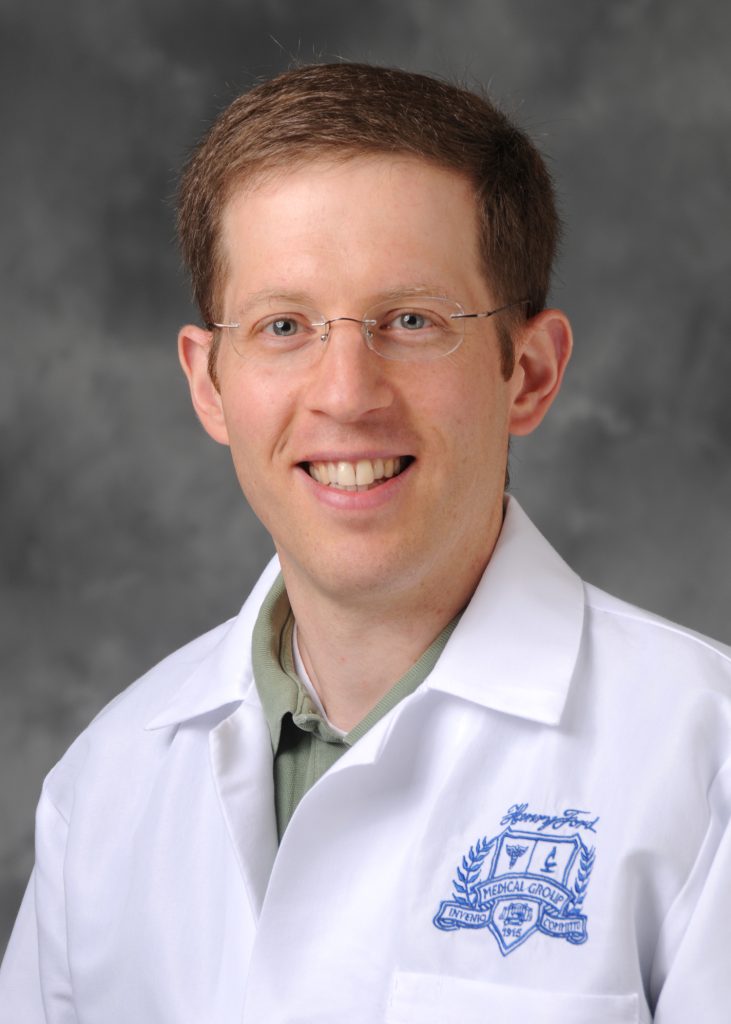
In his former career, medical physicist and ABR volunteer Matt Vanderhoek, PhD, taught high-school physics in Brooklyn. Getting students interested in the subject took effort.
To overcome the challenge, Dr. Vanderhoek would spend the opening day of class doing demonstrations that captured his pupils’ attention. Knowing they were going through a boring day of reviewing syllabi in their other classes, Dr. Vanderhoek wanted to build enthusiasm and get students excited about what they could learn.
“I would tell them, ‘Physics is super cool and I’m going to show you why you’re going to love this class,’” he said. “I spent the first day doing demos that would blow your mind.”
One of his favorites involved putting handles through the axle of a bicycle wheel. He would take a string and attach it to the end of one handle and spin the wheel. Students expected the wheel to fall and were shocked when it remained vertical and rotated around the string on a horizontal plane.
His students were amazed.
“They thought it was physically impossible,” Dr. Vanderhoek said. “They would say, ‘Let me do it.’ I would give them the wheel and say, ‘We’re going to learn how to explain this and why this happens.’”
The students’ homework assignment the first night was to come up with 20 questions they had about the physical world. They read them to the class the next day, setting the stage for a year of learning.
“In the last week of school, we would come back to all those questions,” he said. “It was amazing how many we could answer with just one year of high-school physics.”
When he was ready to move on from teaching, Dr. Vanderhoek knew he wanted to be a student again and originally considered pursuing a law degree. He changed his mind when the father of a friend asked if he wanted to meet a medical physicist. Dr. Vanderhoek had no idea what a person in the field did, so he shadowed the physicist and was sold on a new career direction.
“I saw what he did and thought it was the coolest thing ever,” he said. “It was really exciting. There were new technologies, and helping patients seemed really interesting. I just dove right in.”
After earning his PhD in medical physics from the University of Wisconsin, Dr. Vanderhoek was hired by Henry Ford Hospital in Detroit once he completed a residency there.
As an imaging physicist with a specialty in fluoroscopy, he sees himself as a problem solver. Personnel across the hospital have his number on speed dial.
“A radiologist will call me with a problem or a nurse will call and say, ‘We need your help right now,’” he said. “I take everything that I was going to do that day and set it aside to spend the rest of the day or maybe the next two days helping them.”
Dr. Vanderhoek still finds the time to serve as an ABR volunteer. He has written exam questions, served as an oral examiner, and is part of the Medical Physics Continuing Certification Advisory Committee.
Former ABR Trustee Kalpana Kanal, PhD, was the chair of that committee until her term on the Board expired last October. She appreciated Dr. Vanderhoek’s ability to efficiently make his points.
“He’s a quiet presence, but when he speaks, it matters,” she said. “His input is always thoughtful and moves the discussion forward in meaningful ways.”
Dr. Vanderhoek recently had a sonographer attend one of the classes he teaches to hospital staff on fluoroscopy safety. She approached him after the session with a question related to her field. Not particularly active in ultrasound, he leaned on his ABR experience to give an answer.
“I knew enough about ultrasound, thanks to volunteering for the ABR,” he said. “Being on the OLA (Online Longitudinal Assessment) and examiner sides keeps me up to date.”
The ABR has benefited from Dr. Vanderhoek’s involvement as a volunteer and he’s happy to provide his expertise. As a diplomate board certified in both diagnostic and nuclear medical physics, he’s valuable to have around.
“When you become part of the process, you start to appreciate it and what the organization does,” he said. “That’s true with any process or institution. You become involved in it, you have some ownership in it, and you appreciate it more. I’m very thankful to the ABR for recruiting me and allowing me to be involved.”