She’s Found the Right Career and Workplace to Feel Fulfilled
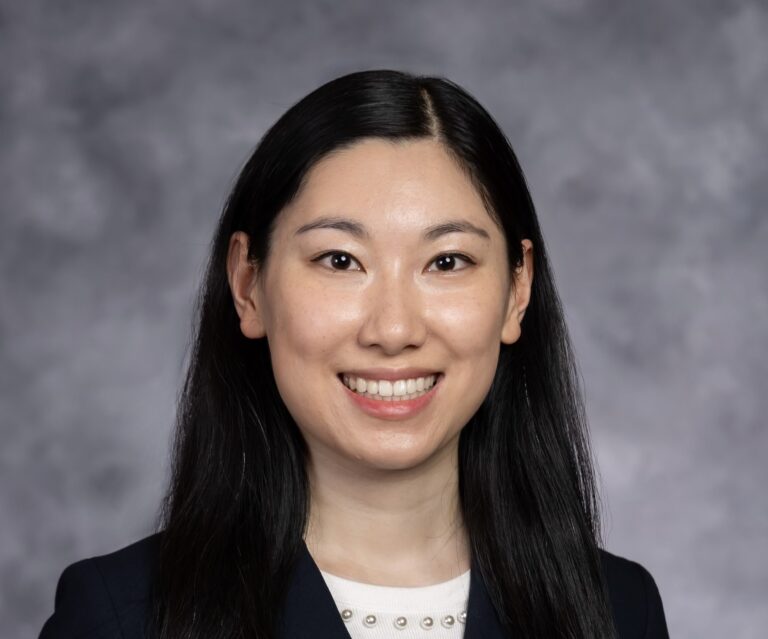
Chelsea Pinnix, MD, PhD, has a litmus test for what qualifies as a good job.
“I tell my kids that you want to look for a job that, if you hit the lottery, you would still want to get up and go to work the next day,” she said.

Dr. Pinnix has found that fit at The University of Texas MD Anderson Cancer Center in Houston, where she serves as professor, residency program director, and deputy division head of education in the department of radiation oncology.
She likes MD Anderson so much that she didn’t interview anywhere else before taking a job there after completing her radiation oncology (RO) residency in 2012. A Baltimore native who earned her PhD in cell and molecular biology and her medical degree at the University of Pennsylvania, Dr. Pinnix has made Houston her home.
“I didn’t expect to be in Houston,” she said. “I always saw myself as someone who would be on the East Coast. But when I visited as a medical student applying for residency, I fell in love with the people here and MD Anderson as a place.”
A strong advocate for trainees, her duties as a director of one of the largest RO residency programs in the country gives her the opportunity to be a positive force in their lives.
“I find that sometimes when you’ve been in practice so long, you can forget what it was like being a resident,” Dr. Pinnix said. “When you lose that perspective, sometimes you can unintentionally create difficult situations for trainees.”
Dr. Pinnix also represents trainees as a member of the ABR’s RO Initial Certification (IC) Advisory Committee. The group, which includes a mix of diplomates and residents, meets with ABR representatives to improve the IC exam experience.
“I appreciate how the committee is formed because we want the certification process to have standards and to be fair,” she said. “I like that I have the opportunity to speak with trainees and hear about even small pain points and communicate that to the ABR.”
Michael Yunes, MD, has known Dr. Pinnix for five years. They met as oral examiners for the lymphoma section of the RO Certifying Exam. As the ABR’s associate executive director for radiation oncology, he has seen his colleague provide a valuable perspective to the group.
“Dr. Pinnix is acutely aware of the requirements, and her participation in the Initial Certification Advisory Committee has provided an amazing resource for the ABR to draw upon,” Dr. Yunes said. “It is always a pleasure to discuss radiation oncology training and certification with Dr. Pinnix, as I frequently learn of concerns that the ABR may otherwise not be aware of.”
Dr. Pinnix, who earned her board certification in 2013, started as an ABR oral examiner in 2019 after a brief stint as a qualifying exam question writer. As someone who has often been on the examiner side of the table, she keeps the candidate’s often nervous perspective in mind.
“I remember the fear and anxiety that I had surrounding the exam, especially the oral component,” she said. “I reflect on that quite a bit and it’s helped to color the type of examiner that I am.”
She believes that the ABR has made progress in easing candidate stress, from providing mock exam videos to explaining criterion-referenced scoring. A little help goes a long way toward calming nerves in a high-stakes environment.
“There’s more transparency, more information to guide them, to prepare them appropriately,” Dr. Pinnix said. “I think we’re moving in the right direction.”
When talking with residents, Dr. Pinnix stresses the importance of being prepared but adds that you don’t need to be perfect when taking an ABR computer-based or oral exam. You don’t have to be a superstar to pass.
“We all aim to be that,” she said. “I think oncologists, we’re all Type A, we want to be the best. I’m glad that’s the goal. But (examinees) don’t have to achieve perfection to pass the exams.”
As a medical student, Dr. Pinnix’s interests included gynecology, oncology, and performing procedures. A conversation with one of her physician colleagues convinced her to try radiation oncology.
The talk resolved her misgivings about the field. She thought she would be stuck in a basement with little to no patient interaction. That definitely would not be a lottery job.
“Radiation oncology brings so many opportunities to interact with other specialties,” Dr. Pinnix said. “I enjoy the time that I get to spend with patients. I love contouring. One of my favorite work-related activities is sitting in my office with Pandora turned on, listening to R&B music, singing, and contouring.”