Her Patient Education Efforts Make for a Busy October
October is a busy month for breast imagers. A recent study showed that mammogram rates can run 60 percent higher during Breast Cancer Awareness Month than any other time of the year.
That’s OK with Eshani Sheth, DO, a diagnostic radiologist at the Winship Cancer Institute at Emory University and assistant professor in the division of breast imaging at Emory University School of Medicine. Just getting people in the door for preventive screenings is her goal.
“We’re able to meet with our patients face-to-face and give them the guidance they were looking for or deliver the worst news that they would possibly want to hear, but in a way that provides them with the knowledge that the care they need is available,” she said.
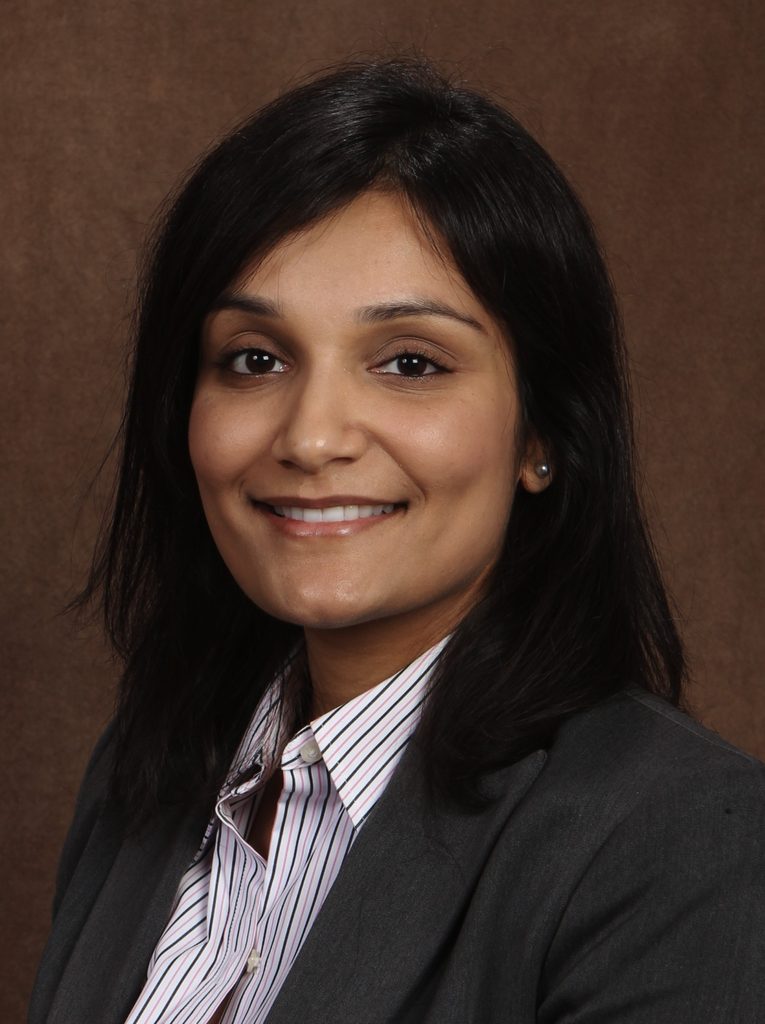
Dr. Sheth and her colleagues spend much of the year raising awareness about the value of breast screenings. Those efforts pick up as October approaches. She wants to make the process less intimidating and spread knowledge about the importance of annual screening for early detection. Breast Cancer Awareness Month is a time to rally around the cause.
“The chances of getting a woman in for a mammogram who was maybe otherwise hesitant are best around this month and season,” Dr. Sheth said. “My goal and effort along with our Emory breast team is to try to do as much patient education and community outreach as possible.”
Christopher P. Ho, MD, the director of the breast imaging division and a professor at the Emory School of Medicine, said Dr. Sheth is dedicated to helping patients through outreach and innovation.
“She is thoughtful and compassionate in her care of all our breast imaging patients,” he said. “Her advocacy for our patients is evident in her role developing new service lines and patient education events.”
An example is a contrast-enhanced mammography program that Emory is adding to help with early breast cancer detection. It’s a vascular-based imaging technique that combines a standard digital mammogram with an intravenous injection of an iodine-based contrast dye to highlight active cancer and its surrounding vessels.
“I think that it is going to be highly beneficial for our patients,” Dr. Sheth said. “It is an accessible and specific supplemental imaging tool for women at intermediate risk for developing breast cancer or those with dense breast tissue — a significant number of women. This imaging technique is best used in conjunction with other imaging modalities, namely MRI and ultrasound, to help unmask hidden cancers.”
Radiology runs in Dr. Sheth’s family. Her father, Snehal Mehta, MD, is a diagnostic radiologist practicing in Houston. Although she was aware of her dad’s work growing up, Dr. Sheth said the idea of entering the profession wasn’t appealing in her youth. That changed over time.
“As the years went on, I realized what I was trying to fight all along was actually the right career choice,” she said. “I eventually saw the intellectual challenge and unique value radiology provides in guiding patient care. My father’s career as a radiologist initially made me want to rebel a little bit, but eventually drew me back in.”
Dr. Sheth had her mind set on breast imaging after her mother was diagnosed with triple-negative breast cancer and underwent treatment at MD Anderson in Houston.
“Seeing her go through the care that she received and learning about the role breast imagers played from detection to diagnosis and beyond really sparked my interest,” Dr. Sheth said. “Knowing that I would have that impact in women’s care and be able to help other women like my mother was a big motivator for me. It helped me understand the psychosocial impact of this diagnosis from the patient’s perspective.”
A member of the ABR volunteer committee that writes Online Longitudinal Assessment breast imaging questions, Dr. Sheth is happy to be helping ensure patient safety through continuing education.
“I really enjoy developing questions for Continuing Certification,” she said. “It’s gratifying to be able to choose real-life cases that you’ve witnessed to assess general breast imaging knowledge. The thought process and the mechanisms that we have in place to review questions is eye-opening and a great learning experience for me. I’m thrilled to be volunteering for the ABR.”