Lone Radiologist Duties Enriched His Career
Fresh off his diagnostic radiology residency at Barnes-Jewish Hospital in St. Louis, Jason Wagner, MD, had a military commitment to satisfy before moving on to his planned fellowship.
His assignment? Tinker Air Force Base in Oklahoma City needed a radiologist who could fly solo.
“They didn’t need a hospital; there are multiple ones within miles of the base,” said Dr. Wagner, who worked at Tinker from 2005 to 2009. “It was just a really big outpatient clinic, and I was the one and only radiologist there.”
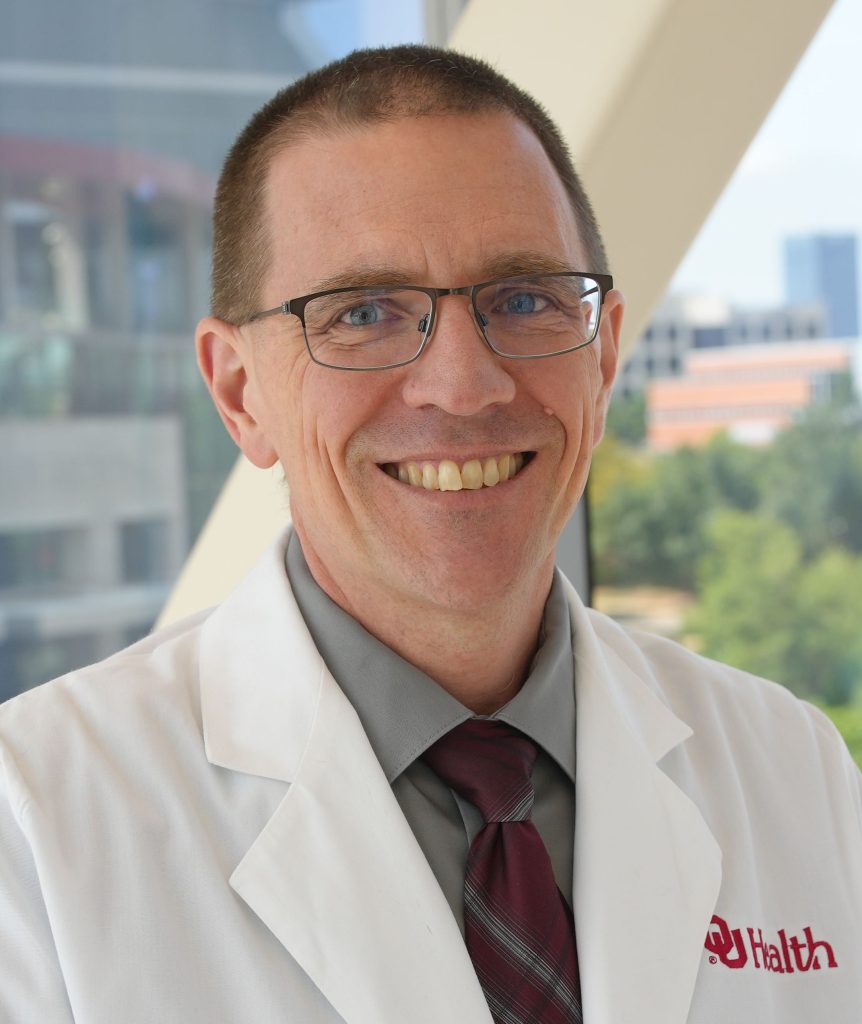
It didn’t take long for Dr. Wagner to realize that his responsibilities went beyond what he imagined.
“In the first couple of days, I asked one of the senior technologists, ‘Who’s the PACS administrator?’ And he looked at me and said, ‘I think you are,’” he said.
Being the lone radiologist had its advantages. It gave Dr. Wagner the opportunity to be more hands-on than he would have been in a larger, more specialized setting. For example, he performed several thousand ultrasounds during his time at Tinker.
“It was not uncommon for an ultrasound tech to have an issue and not be able to come to work and we would have a full schedule,” he said. “So I was the technologist in addition to being the radiologist. It allowed me to develop a lot of ultrasound technical skills.”
The experience assists him in his current job as a professor in the department of radiological sciences at Oklahoma University Health Sciences Center.
“I get to teach in the sonography school, and I can speak their language as well as with our ultrasound techs,” he said.
Dr. Wagner’s decision to pursue medicine started when he was often sick as a child in Missouri and spent time in his pediatrician’s office. He said he thought his physician “hung the moon” and that admiration inspired his career path.
He also had a unique request born out of being a first grader.
“I decided when I was 6 that I wanted to be a pediatrician,” he said. “I told my pediatrician that I wanted to join his practice, but that I wanted to drive a big rig and needed to be able to park it behind his office.”
Dr. Wagner carried that dream through earning a chemistry degree at Missouri State University and into medical school at the University of Missouri. Early exposure to radiology helped change his mind.
“I got to do a radiology course for first-year medical students and thought, ‘This is amazing. This is super cool,” he said.
He hasn’t completely let go of his interest in helping children. As a body imager and ultrasound subspecialist, he still gets the chance to work a bit on the pediatric side.
“I do a lot of general radiology, including some pediatric imaging,” he said. “We have dedicated pediatric radiologists who do some of the more high-end work, but I help them.”
Dr. Wagner is the chair of the ABR committee that writes ultrasound questions for the Diagnostic Radiology Qualifying (Core) Exam. Like the hundreds of other subject-matter experts who create content for ABR exams and Online Longitudinal Assessment, he leans heavily on his professional experience to ensure that his questions are fair and appropriate for the audience.
“It has made me a better ABR question writer because I have a good background after having done so many (ultrasound) exams,” he said. “I understand the whole process of getting images and what residents need to learn and take away from that.”
Part of the committee for 10 years, including eight as chair, Dr. Wagner will be rotating off those duties at the end of the year. Ed Oliver, MD, who has been part of the committee for six years, will be taking over as chair.
Dr. Wagner is pleased with where things stand and is certain that Dr. Oliver will keep the committee going strong.
“This committee and the question bank that we’re responsible for are in good shape,” he said. “It’s been great to be involved in that.”
Leslie Scoutt, MD, is the ABR Trustee for abdominal imaging. She has worked closely with Dr. Wagner for years and admires his knowledge and dedication.
“No one wants to rotate off his committee,” Dr. Scoutt said. “He embraces new concepts in and approaches to education and is devoted to resident education and the mission of the ABR to ensure that patients receive the best possible care. I look forward to his continuing contribution to radiology, resident education, and patient care. It has been a privilege to work alongside him.”