Volunteer Still Enjoying His OLA Committee Run
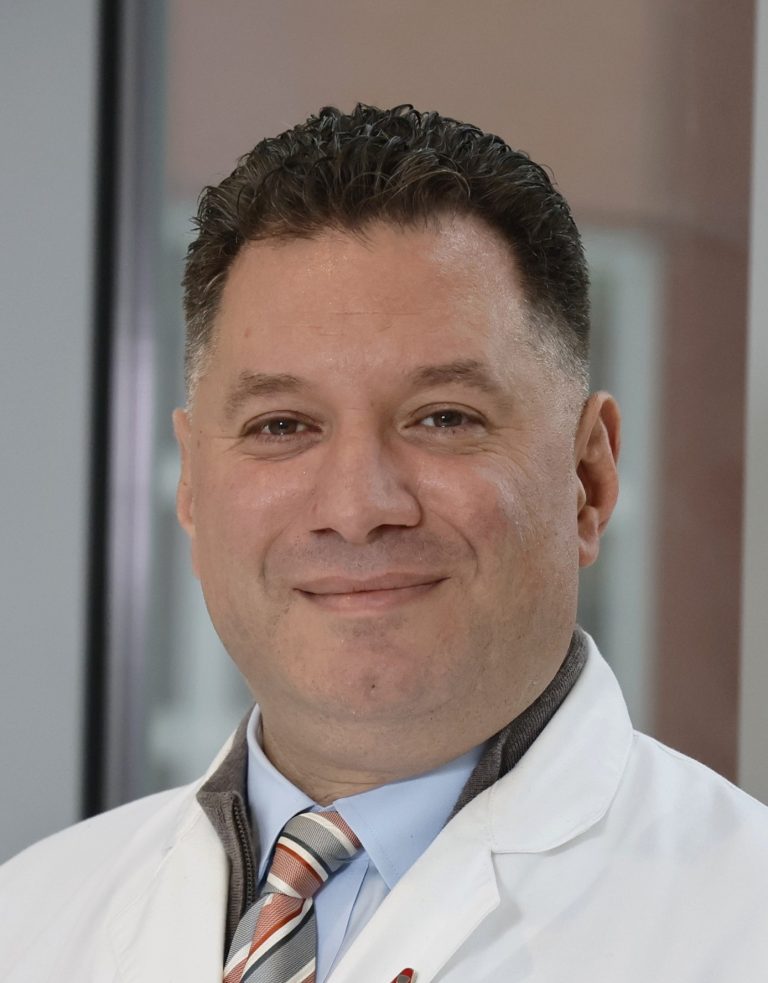
Hirschel McGinnis, MD, participates in Online Longitudinal Assessment (OLA) and is a dedicated runner. He sees striking parallels between the two pursuits.
“When you finish a run, it’s not like you’re completely done,” he said. “There’s always another run on the horizon. Sometimes I ask myself, ‘Gosh, why am I doing this?’ And my answer is usually, ‘So I can do it again.’”

Participating in OLA is also like running a race — but it’s a marathon, not a sprint. Unexpected challenges can arise along the way, but perseverance and a commitment to excellence enable diplomates to achieve long-term success.
“(OLA) allows me to live in a more confident and relevant space,” Dr. McGinnis said. “I know even if I get a question wrong, it’s not a definitive negative mark about who I am as an interventional radiologist. It’s just one question that I can learn from and grow.”
Dr. McGinnis believes taking part in OLA fosters a sense of community, like a running club. Most ABR diplomates choose OLA to satisfy Part 3 of Continuing Certification.
“Every week, I feel engaged, not just by the ABR, but by my IR peers across the nation,” he said. “It’s a chance for us to connect with each other virtually. Even though it’s a singular experience, it feels like I’m participating in something much larger.”
Dr. McGinnis also writes OLA interventional radiology (IR) questions. The platform is an ongoing assessment of physicians’ and physicists’ knowledge that serves as a substitute for a point-in-time exam. OLA questions are intended to reflect walking-around knowledge, the type of content that doesn’t require study. The question-writing committee’s review process requires collaboration among members to craft and curate a body of questions that are fair and relevant.
The IR clinical director at Beth Israel Deaconess Hospital Plymouth, Dr. McGinnis is one of many experts on his committee. It’s each team member’s obligation to scrutinize and revise proposed questions.
“I’m discussing topics with people from the most prestigious institutions in the country, and sometimes, I have to be brave enough to say, ‘I don’t know that. I’m not sure that’s walking-around knowledge,’” he said.
Suvranu Ganguli, MD, is the chair of the OLA IR committee. He said his colleague strives to find balance between rigor and fairness when developing and reviewing potential content.
“Hirschel brings an important practical perspective and is always asking, in one way or another, ‘Is this something a practicing interventional radiologist really needs to know?’” he said. “That is particularly important for OLA. We should be testing the kind of walking-around knowledge that an interventional radiologist uses in everyday practice, and we can always count on Hirschel to bring us back to that.”
Dr. McGinnis appreciates that OLA offers flexibility, including the option to press on or stop each year after answering a minimum number of questions (52, for most diplomates). He believes in the value of consistency, treating the platform the way he does his clinical work.
“Every run isn’t a race, and no single OLA question is a definitive judgment of a diplomate’s overall worthiness,” he said. “Each time we run, we’re exploring our fitness. The conditions, gear, time of day, and our physical state are never the same. But with each engagement, we commit to practice and, at times, master ‘The Difficult.’ I’m talking about running, but I’m also not talking about running. The OLA process is challenging, but that rigor is essential because patient well-being matters. Patient safety is strengthened by the ABR OLA process, ensuring our diplomates have deep knowledge and sound judgment. I truly believe the OLA experience is fair. That’s why I enjoy answering questions every week of the year.”
Board certified as a diagnostic radiologist in 1994, Dr. McGinnis also earned what was then called a certificate of added qualifications (CAQ) for IR three years later.
It was a big accomplishment, but the reality was that he had to take a one-day Maintenance of Certification exam a decade later.
“(Earning the CAQ) was a huge moment for me personally and in my career,” he said. “And 10 years later, it was time to do it again. High-stakes tests are never that enjoyable.”
The effort was worth it. Dr. McGinnis is on a good career run. His patients have made that clear.
“I have a drawer full of thank you letters I’ve received over my career,” he said. “I’ve never thrown a single one out. Each one means something very important. I connected with someone in a way that was meaningful beyond a handshake at the end of the procedure. They took some time out of their busy day to write it down with a pen, put a stamp on it, and mail it to me. It’s not going to get any better than that.”