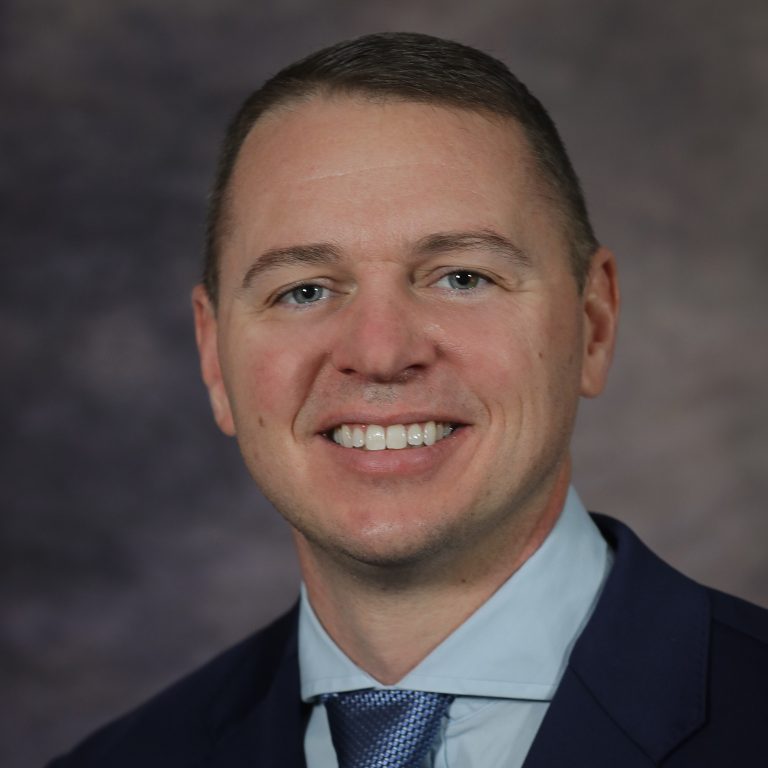
Volunteer Spotlight – IR: With More to Contribute, He’s Staying on as a Volunteer
By ABR Associate Director of Communications Rodney Campbell
June 2026;19(3):9

When he completed his time on the ABR Interventional Radiology (IR) Continuing Certification Advisory Committee, Jeff Weinstein, MD, still had plenty to offer as a volunteer.
As president of the Association of Program Directors in Interventional Radiology (APDIR) at the time, his next role was a natural. He was a nice fit for the ABR IR Initial Certification Advisory Committee, which was made clear when he and the group came to Tucson earlier this year to meet at the ABR headquarters.
“It’s great to be able to understand more about the ABR and how it works,” Dr. Weinstein said. “I already understood some of the mission, but physically going there and seeing the offices and interfacing with people face-to-face helps solidify how they deliver the mission and my role in helping them.”
The ABR’s Initial Certification Advisory Committees serve as liaisons between the ABR and trainees. Committee members circulate information and suggestions between the two sides to improve the Initial Certification experience for candidates.
Dr. Weinstein is chief of vascular & interventional radiology, vice chair for interventional services, and vice chair of education in the department of radiology at Beth Israel Deaconess Medical Center/Harvard Medical Faculty Physicians and is on the teaching faculty at Harvard Medical School. He has worked extensively with trainees and fellows since coming to Boston in 2015, serving a decade as a program director, originally for the fellowship followed by the integrated and independent residencies as they came online.
Dr. Weinstein finds watching trainees improve their clinical and technical skills as they go through the program one of the most satisfying parts of working with them.
“They come in with a very basic skillset and shortly after they leave, they reach out to tell me that they’re doing a very complicated caval reconstruction or a complex portal vein intervention or they’re at the forefront of something new that I didn’t teach them,” he said.
Resident and fellow instruction goes both ways, he says, satisfying his desire to grow as an educator.
“I learn from them as much as they learn from me,” he said. “With each generation and each group, there are different outside forces – market forces, political forces, social forces – that make differences in how they learn and what they’re interested in.”
Fellow ABR volunteer Quinn Meisinger, MD, followed Dr. Weinstein as APDIR president. He said his colleague always has trainees’ best interests in mind.
“Dr. Weinstein has established a legacy as both an exceptional interventional radiologist and a devoted medical educator whose leadership continues to shape the future of our specialty,” he said. “He has been a tireless advocate for trainees, meticulously mentoring fellows and guiding them into successful academic and clinical practices. I am proud to call him a mentor and friend.”
A first-generation physician, Dr. Weinstein’s interest in the career path started by watching medical shows on TV as a kid. He knew the programs didn’t reflect real life, but they led him toward the field. He chose interventional radiology while attending Thomas Jefferson University’s Sidney Kimmel Medical College.
“My definition is things like ‘House,’ where patients come in, you diagnose their issue, and then do the operation,” he said. “It was not the way the real world works. I knew that consciously, but I wanted to be able to be like that and sort of do everything. Interventional radiology is probably one of the most diverse specialties that allows me to diagnose and treat the widest variety of disease states.”
A crucial element of becoming a physician or medical physicist is earning board certification. Dr. Weinstein compares the ABR’s commitment to providing a rigorous exam process and to patient safety with aviation, another profession where people’s lives can be at stake.
“I’m expecting every time I get on the plane in Boston to go to Florida, it’s going to land in Florida,” he said. “If there’s turbulence, pilots have been prepared for it.”
Just like airline pilots, ABR diplomates inspire confidence in the people they serve. Meeting your discipline’s board standards means more than hanging a certificate on an office wall.
“Patients expect that you have reached a level of excellence and that they should feel safe,” he said. “That’s why you’re going through all these steps and these exams to make sure that (the ABR has) fulfilled our social contract with the public, that we are doing everything in our power to make sure that people are safe.”