Advisory Committee Member Was Born to Become a Physician
One ABR volunteer’s path to medicine started before he was born.
As a child, Dru Curtis, MD, noticed a scar on his father’s abdomen and wondered what caused it. Before he understood the seriousness of the incident, he knew there was a medical connection.
“Growing up, I heard stories about how my father was saved by a surgeon,” he said.
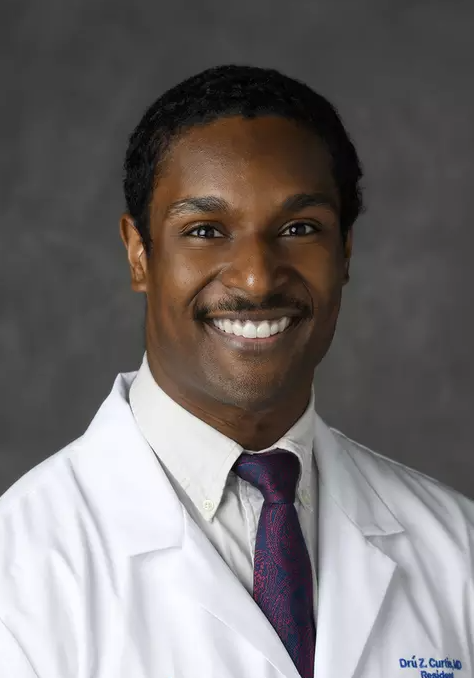
His father was shot during a robbery attempt in New York City several years before Dr. Curtis was born. His dad was rushed to the hospital for surgery that saved his life. Years later, that physician’s skills influenced Dr. Curtis’ career path.
“When I got to high school, we had different academies to choose from and health was one of them,” he said. “I instantly gravitated toward that.”
Dr. Curtis entered the program at St. Lucie West Centennial High School in Florida planning to become a surgeon, a goal he carried through his undergraduate studies at the University of South Florida.
But his plans changed in medical school at the University of Florida, when a friend from his anatomy group suggested he should consider diagnostic radiology.
“He had me go down to the reading room,” Dr. Curtis said. “It was just instant. A light bulb went off. They made four different diagnoses within an hour, including an aortic dissection with the patient immediately going to surgery. Getting to see those diagnoses and being the ‘doctor’s doctor’ did it for me.”
Dr. Curtis further narrowed his focus during his residency rotations at AdventHealth in Orlando, where he recently started a nuclear radiology fellowship.
“Being able to integrate physiology into everything that we do and the patient demographic drew me to it,” he said. “I couldn’t do anything else once I rotated with it. This is what I’m going to do, and I’m going to provide good care to patients.”
Jess Graham, MD, who is fellowship trained in nuclear radiology, has worked as an attending for Dr. Curtis at AdventHealth. He saw great potential in his colleague from the outset.
“My first impression when he was a junior resident was his refreshing enthusiasm for nuclear radiology,” Dr. Graham said. “He showed and continues to show a very high interest in the specific physiologic aspect of nuclear radiology, through his reading, high-quality interpretations, section ownership, and even having submitted a full case report to a medical journal at that early time.”
Dr. Curtis gives back to his specialty by serving as a member of the ABR Diagnostic Radiology Initial Certification Advisory Committee. Nominated by the Association of Program Directors in Radiology, he has been a member of the group since 2024.
He is also a board certification candidate, having recently passed the DR Qualifying (Core) Exam. He appreciates the committee’s goal of continually improving the Initial Certification process.
“It’s been extremely helpful to transmit information to residents and be able to discuss their questions and come back to the ABR with their concerns,” Dr. Curtis said.
The period between taking the exam and getting results can be stressful for candidates. Being part of the advisory committee gives Dr. Curtis insight into why the scoring process takes time and often works to candidates’ advantage.
“There are several steps of verifying and validating the questions,” he said. “It eased my anxiety of having to wait for the results and served as a reassurance for me.”
The committee met in person at the ABR’s Tucson headquarters in March, giving members the chance to get to know each other and the organization better. Dr. Curtis returned home inspired.
“I would like to continue to contribute and give back as much as I can,” he said. “I mentioned while I was (in Tucson) that I’ve been saving cases since my first year on the committee to show to medical students and other residents. Being able to continue as a volunteer would be great.”
Although his career focus strayed from surgery, Dr. Curtis’ goal remains the same. He wants his work to benefit society, just like the surgeon who saved his father’s life.
“When I was going through school, it just felt right,” he said. “You hear about how this person impacted your family and how you have the possibility to do that for other people. I could see no better way to help my community.”