He’s Not Kidding: Second Board Certification Is Within Reach
Already board certified in diagnostic medical physics, Adrian Sanchez, MD, PhD, is on his way to earning diagnostic radiology certification.
Dr. Sanchez is accustomed to change and chaos. He and his wife have seven kids who range in age from two months to 11 years.
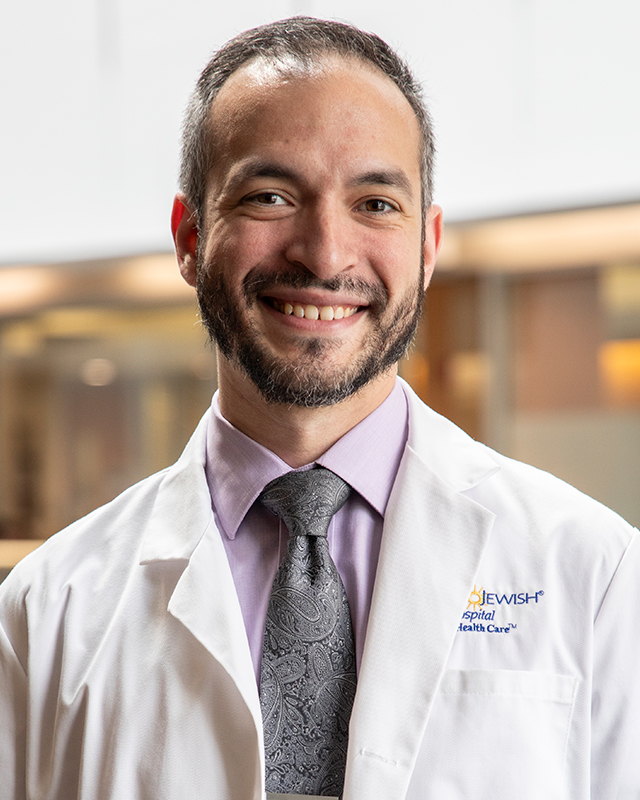
“It’s funny because (having children has) aligned with my professional changes,” he said. “When I was writing my doctoral thesis, we just had our daughter. Then when I started studying for the MCAT, we had our second, and the first year of med school, we had our third.”
Dr. Sanchez will complete his diagnostic radiology (DR) residency at the Mallinckrodt Institute of Radiology in June with an eye on later taking the DR Certifying Exam. He’s already secured a job at Mallinckrodt, keeping him in St. Louis, a place that offers his family many entertainment options, including a zoo and numerous parks.
“My oldest boys play basketball, so we’ll do that while the others are on the playground,” he said. “It feels like everyone has every conceivable extracurricular activity. We’ve got dance, soccer, baseball … all kinds of things.”
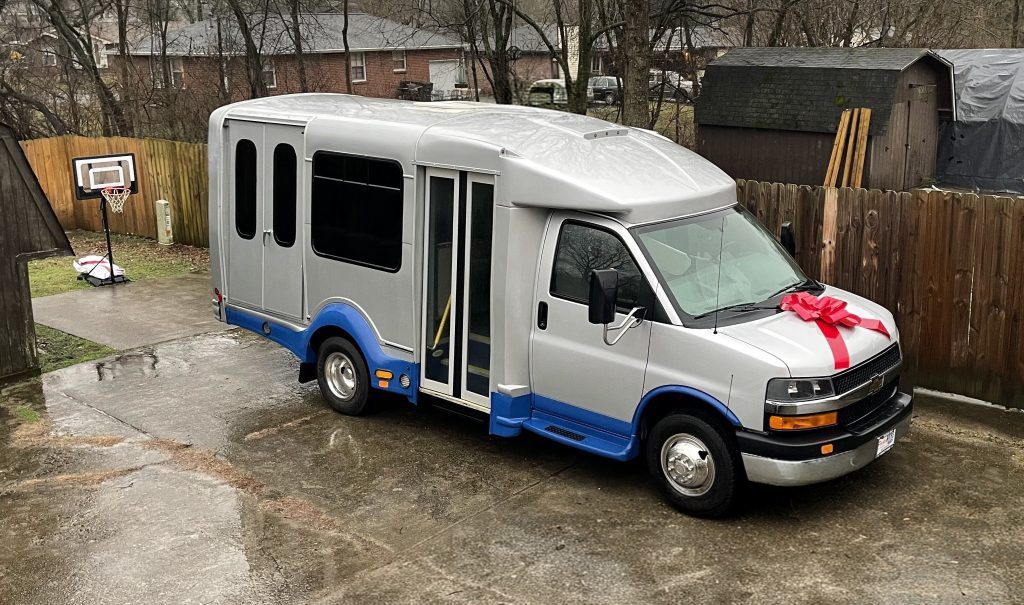
With seven children, including one with cerebral palsy who’s in a wheelchair, he and his wife had to find a unique option for transportation.
“If you start looking at the market for vehicles that can carry a wheelchair, seven children, and two adults, it becomes a pretty short list,” he said. “We bought a shuttle bus that used to service a retirement community in Chicago. If you see us pull up to the park, you know who we are.”
Dr. Sanchez is also on board as an ABR volunteer; he serves on the DR Initial Certification (IC) Advisory Committee. The members act as conduits between the organization and trainees who are going through the IC process.
Desiree Morgan, MD, chair of the advisory committee, appreciates Dr. Sanchez’s involvement, especially given his experience of earning medical physics (MP) certification in 2018.
“Dr. Sanchez brings an incredibly unique perspective to the committee,” she said. “His contributions to our discussions are mature and insightful, particularly as we bring on the new remote oral certifying exam for DR. I’m thrilled to have his wisdom and enthusiasm impacting our committee’s work.”
Dr. Sanchez had opportunities to work with diagnostic radiologists while earning his doctorate at the University of Chicago. The experience had him thinking about a career change.
“There was a lot of shadowing on different projects that gave me direct exposure when I was a graduate student,” he said. “That put the idea in the back of my mind to start looking into different options.”
Fortunately, Vanderbilt University in his hometown of Nashville, Tennessee, offered free medical school tuition to a few PhD holders each year through its Medical Innovators Development Program. The program, which is no longer tuition-free, is a four-year track that trains future physicians through design thinking, clinical immersion, and hands-on industry experience. Four of the first seven graduates of the program were radiologists.
One of the unique aspects of the program was that it offered several months of immersion in an industry or other entity outside of academia. Dr. Sanchez worked in the Food and Drug Administration’s regulatory branch that oversees medical imaging device clearance and approval.
“I went through the same training that the FDA reviewers go through prior to reviewing submissions, and it allowed me to advise colleagues on how to interpret marketing claims from radiology device vendors in light of their FDA clearances or approvals,” he said. “I think it’s set me up to have a safer practice as a radiologist because I know what process companies went through to gain clearance from the FDA, and what those clearances really mean.”
After earning his medical degree from Vanderbilt, he matched at Mallinckrodt, part of Washington University Medicine in St. Louis. One of his cohort’s chief residents, Dr. Sanchez said the institution fits his refocused career goals.
“(Mallinckrodt), and particularly the research track, is a uniquely well-suited environment for co-developing strong clinical and research skills,” he said.
Even as a medical student and resident, he stayed involved in medical physics, attending association and society meetings and working on physics projects.
“I had a lot of conversations with my wife about this transition,” Dr. Sanchez said. “It was a big motivation for me to maintain my certification in physics if something were to not work out in medicine or in radiology.”
Keeping his feet in both fields has proven beneficial.
“I have meetings where I’m advising in a physics capacity to a group of radiologists, but then I can also go advise the physicists a little bit better than some clinical radiologists because I know what they know and what they don’t,” he said.